If you’ve ever tried to get your dog to listen while the doorbell rings, a squirrel appears, or guests walk in, you already know why basic dog training matters. You’re not alone if it feels like your dog is “great at home” but forgets everything the second real life happens.
The good news is that basic dog training isn’t about having a “perfect” dog. It’s about building a shared language so your dog understands what you want, and you know how to teach it clearly and kindly. 🐾
In this guide, you’ll learn a practical routine you can start today, even if you’re busy, even if your dog is stubborn, and even if you’re starting from zero. We’ll cover the most useful foundation skills, how to use positive reinforcement, what gear helps most, and how to troubleshoot the common problems that make people want to give up.
💡 Why This Matters ?
Basic dog training is about safety, freedom, and less stress for both of you. A dog who can reliably respond to cues like “come,” “leave it,” and “stay” is less likely to bolt into a street, snatch something dangerous, or jump on a child.
It also reduces everyday frustration. Many behavior issues that feel “big” are actually missing foundation skills, unclear expectations, or rewards that don’t match the difficulty. With the right plan, you can often see noticeable improvement in 7–14 days, and much stronger habits in 4–8 weeks (depending on age, consistency, and distractions). ✅
Puppies usually learn faster but need shorter sessions and more naps. Adult dogs can learn just as well, but you may need extra patience if they’ve practiced the “wrong” habit for years. Either way, positive reinforcement helps your dog feel safe, motivated, and eager to work with you.
🎓 Section 1: Basic Dog Training Foundations (Rewards + Timing)
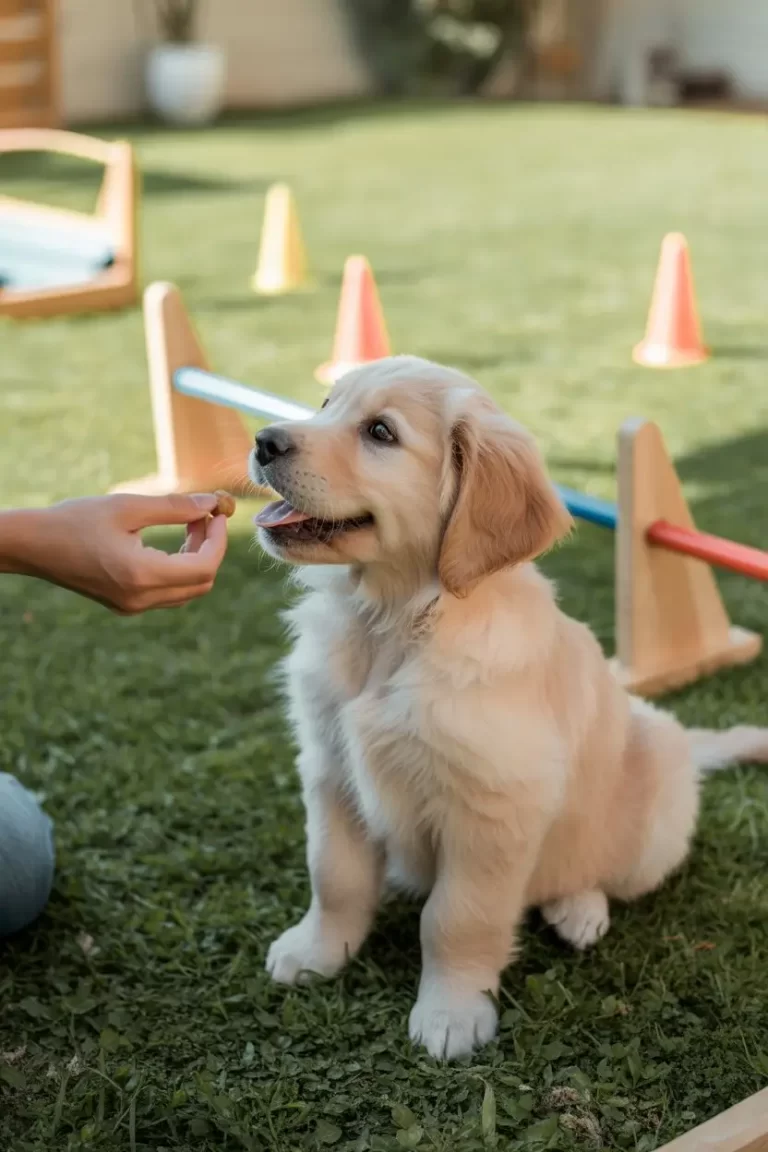
Basic dog training works best when you think like a teacher, not a critic. Your job is to make the right choice easy and rewarding, then slowly increase difficulty as your dog succeeds.
Start with a simple reward system:
- Soft treats your dog can swallow quickly (pea-sized).
- A marker word like
Yes!or a clicker to “capture” the exact moment your dog did the right thing. - Short sessions: 3–5 minutes, 1–3 times daily.
A few practical tips that change everything:
- Keep rewards frequent at the start so your dog stays engaged and hopeful.
- Train before meals or when your dog is a little hungry (not starving).
- End sessions early while your dog still wants more.
Equipment that makes training easier and safer:
- A flat collar with ID tags for everyday use.
- A comfortable front-clip harness for leash work (often reduces pulling).
- A 1.8–2 meter leash for practice (avoid retractable leashes during training).
- Optional: a clicker, a treat pouch, and a mat/bed for “place” training.
One common mistake to avoid is repeating cues like “sit, sit, sit.” ⚠️ If your dog doesn’t respond, it usually means the situation is too hard or the reward isn’t strong enough. Instead, reset: reduce distractions, lure once, reward, and build back up.
Success indicator: your dog responds to a cue on the first ask in a quiet room at least 8 out of 10 times.
✅ Section 2: Basic Dog Training Step-by-Step (Sit, Down, Stay, Come)
Here’s a clear sequence you can follow. Practice in a quiet space first, then gradually add distractions.
- Teach “Sit”
- Hold a treat at your dog’s nose.
- Move it slowly up and back so their head follows and their butt drops.
- The instant they sit, mark (
Yes!) and reward. - Add the cue “sit” only after the motion is predictable.
- Teach “Down”
- Start with your dog sitting.
- Bring a treat from their nose straight down to the floor, then slightly forward.
- Mark and reward when elbows touch the ground.
- If your dog pops up, slow down and reward partial progress.
- Teach “Stay” (as a duration skill)
- Ask for sit or down.
- Say
Stay, pause for 1 second, mark and reward. - Slowly build: 2 seconds, 3, then 5.
- Add distance after duration, not before.
- Teach “Come” (your most important cue)
- Indoors, say your dog’s name +
Come!in a happy tone. - Back up a few steps as they move toward you.
- Mark the moment they reach you and reward generously.
- Add a gentle collar grab + treat so your dog learns being caught is still great.
Common mistakes to avoid:
- Calling your dog to you and then doing something they dislike (bath, nail trim) every time.
- Asking for “stay” and then repeating it as your dog wiggles (instead, reduce duration).
- Moving too fast into distractions like parks before your dog is ready.
Age considerations:
- Puppies: keep stays very short and reward often; their impulse control is still developing.
- Adult dogs: use higher-value treats in the beginning if they’re less food-motivated or more distracted.
🏆 Section 3: Basic Dog Training in Real Life (Leash, Greetings, Troubleshooting)
This is where basic dog training becomes real: when life happens quickly and your dog is excited.
Leash walking (simple version):
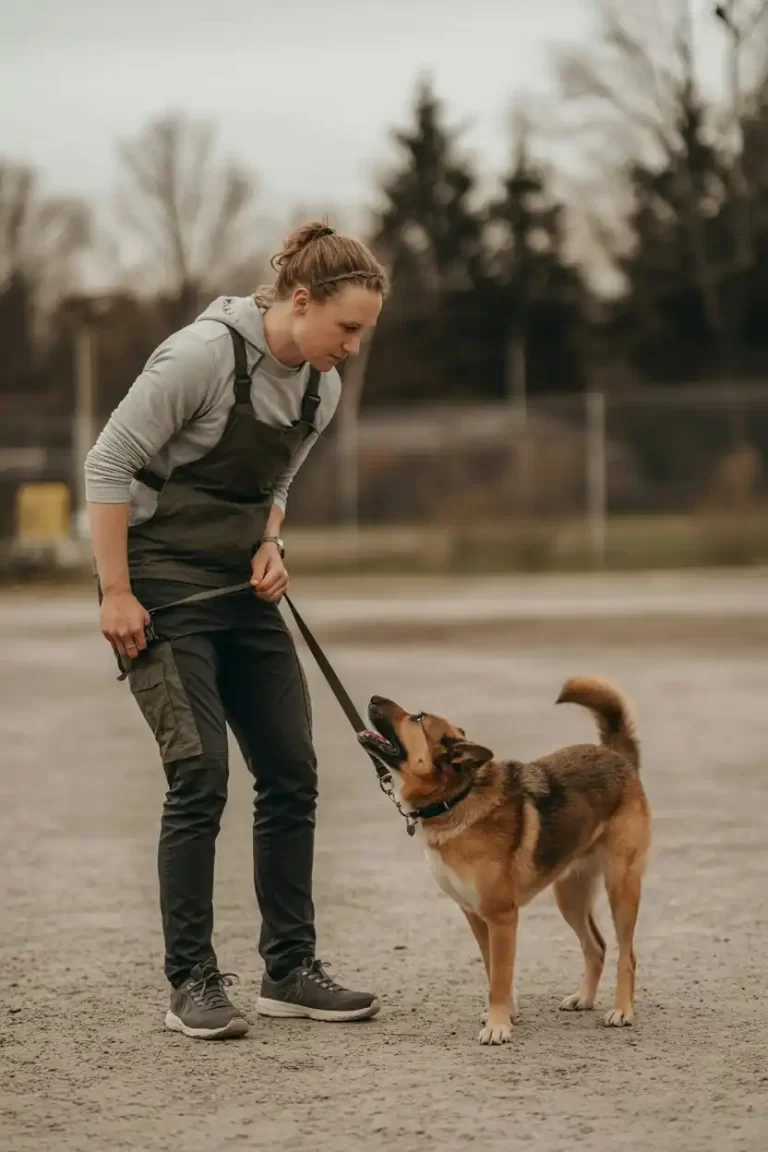
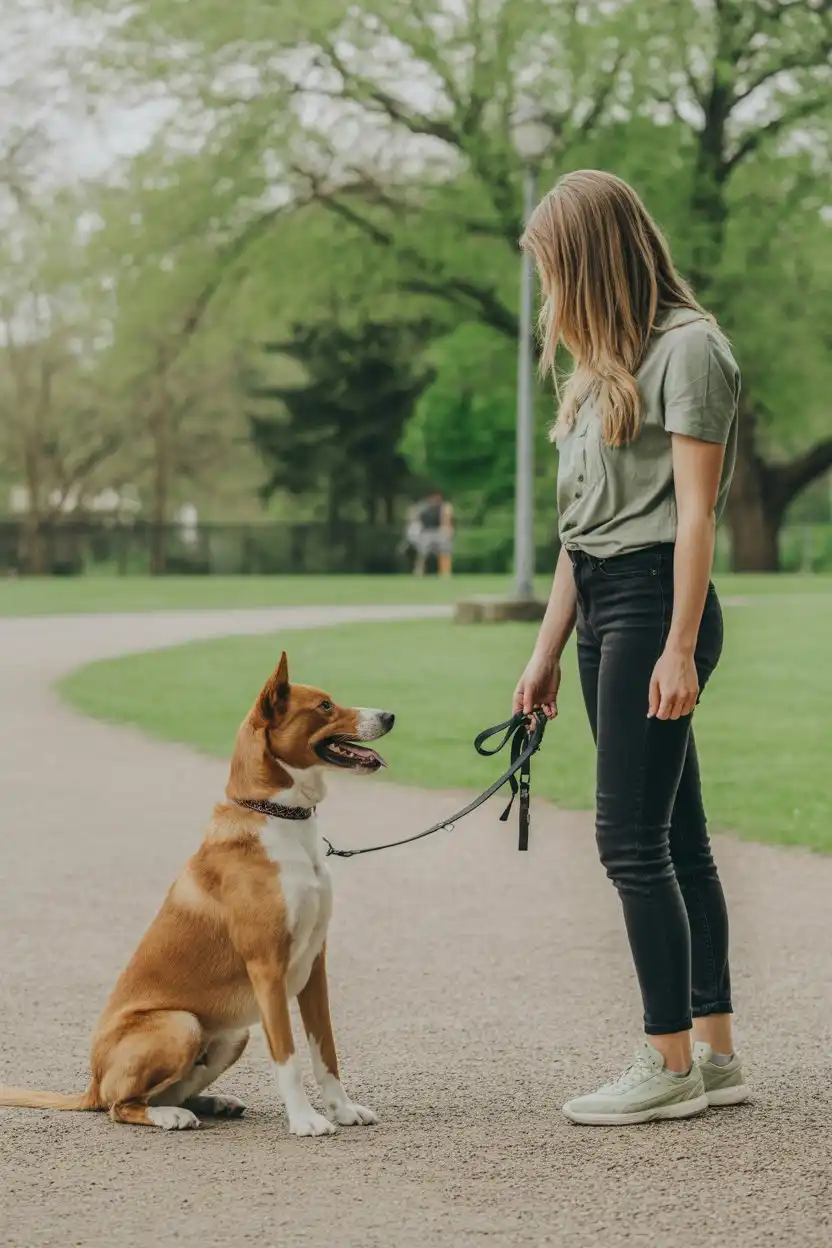
- Reward your dog for being near your leg, not for pulling.
- Start indoors, then your yard, then a quiet street.
- If your dog pulls, stop moving. The leash becomes “off” when tight and “on” when loose.
Polite greetings (stopping jumping):
- Teach an incompatible behavior, like “sit for hello.”
- Ask guests to ignore jumping completely (no eye contact, no pushing).
- Reward your dog for four paws on the floor or a sit.
Add a “place” cue for calm:
- Toss a treat onto a mat/bed.
- When your dog steps on it, mark and reward.
- Build duration by feeding small treats while they stay on the mat.
Troubleshooting common issues:
- If your dog ignores cues outdoors, the environment is too hard—go back to fewer distractions and use better rewards.
- If your dog gets mouthy, end play, offer a chew, and reward calm behavior.
- If your dog barks at triggers, increase distance and reward for looking at you, not the trigger.
Safety notes:
- Avoid harsh corrections that can create fear or aggression.
- Watch for overheating during training, especially in warm weather.
- Use treats appropriate for your dog’s stomach, and reduce meal size if needed.
Success indicator: your dog can perform “sit” and “come” with mild distractions (like a person walking by) at least 7 out of 10 times.
🎥 Video Resource Section
❓ Common Questions
Q: How long should basic dog training take each day? 🐕
A: Aim for 10–15 total minutes daily, split into 2–3 short sessions.
Q: What if my dog isn’t food-motivated? 🍗
A: Try better treats (chicken, cheese), train before meals, and also reward with toys or sniff breaks.
Q: Is positive reinforcement enough for a strong-willed dog? ✅
A: Yes, if you’re consistent and adjust difficulty. Most “stubbornness” is confusion, distraction, or rewards that aren’t valuable enough.
Q: Can older dogs still learn basic dog training? 🧓
A: Absolutely. Adult dogs may need more repetition, but learning is still very achievable.
🎉 Conclusion & Next Steps
Basic dog training is less about forcing obedience and more about teaching skills your dog can actually succeed at—step by step, with clear rewards. Start in low-distraction places, keep sessions short, and treat progress like a staircase, not a straight line. 🐾
Your next step: pick two cues (like “sit” and “come”) and practice them daily for 7 days. Then add one real-life challenge, such as polite greetings or leash walking. If you want faster results, track your sessions and raise difficulty only when your dog is winning most of the time. ✅