
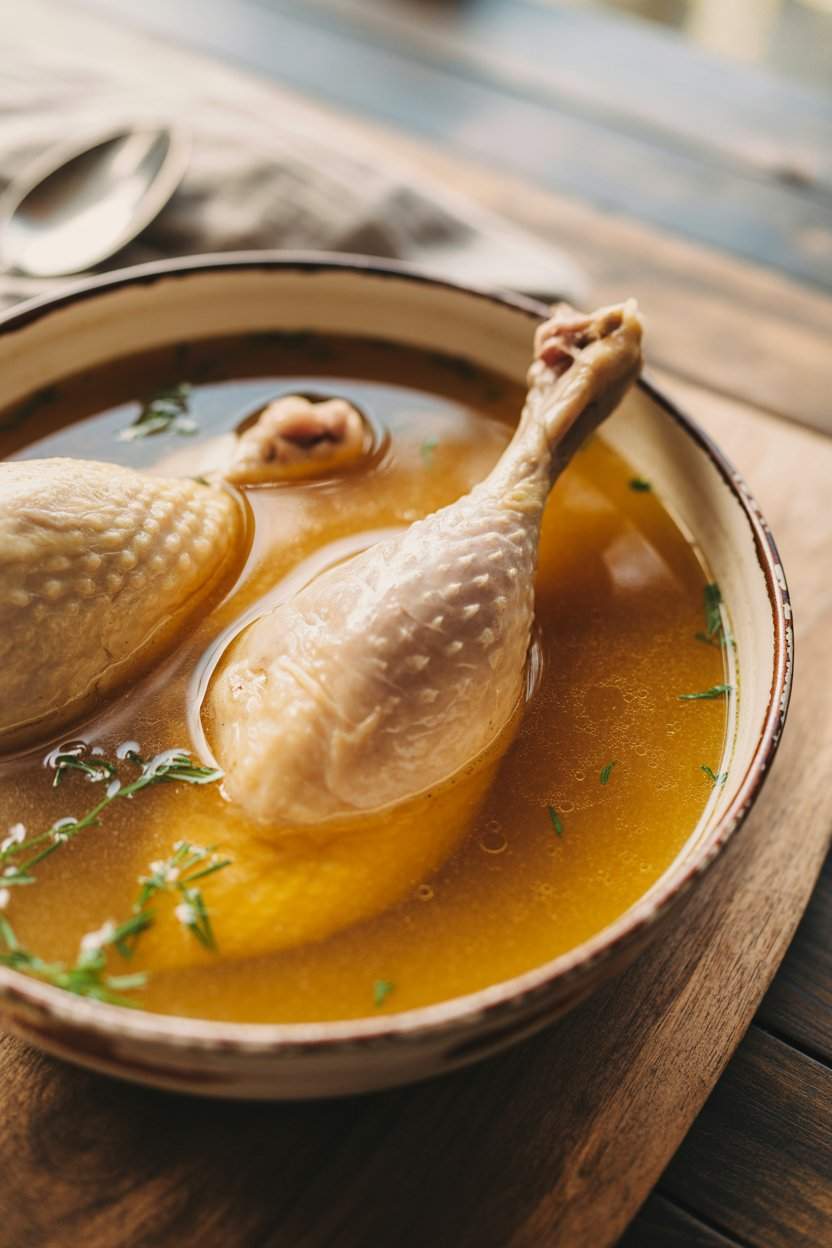
Imagine sinking your spoon into a steaming bowl of homemade chicken broth, the aroma of simmering herbs and vegetables filling the air. It’s a moment of pure comfort and nourishment – and it’s all possible with a simple rotisserie chicken.
While store-bought broth can be convenient, nothing compares to the depth of flavor and the restorative powers of a broth you’ve crafted yourself. By repurposing the bones and remnants of a rotisserie chicken, you can unlock a world of culinary potential that will elevate your soups, stews, and sauces to new heights.
In this comprehensive guide, we’ll show you how to transform a humble rotisserie chicken into the most flavorful, gelatinous chicken broth you’ve ever tasted. Get ready to experience the true magic of homemade stock and discover why this recipe should be a staple in your culinary arsenal.
🍲 Why You’ll Want to Make This Recipe Tonight?
Homemade chicken broth is not only delicious, but it’s also incredibly versatile and nutritious. The long, slow simmering process extracts every ounce of flavor from the bones and vegetables, resulting in a rich, velvety broth that’s packed with collagen, vitamins, and minerals.
What sets this recipe apart is the use of a rotisserie chicken. The natural juices and caramelized bits left on the bones and skin add an unparalleled depth of flavor that you simply can’t achieve with raw chicken parts. The end result is a broth that’s deeply savory, with a subtle sweetness and a silky mouthfeel that will elevate any dish you use it in.
Ingredients
• 1 large onion, roughly chopped
• 2 carrots, roughly chopped
• 2 celery stalks, roughly chopped
• 4 cloves garlic, crushed
• 1 bay leaf
• 1 teaspoon whole black peppercorns
• 1 teaspoon dried thyme
• 8 cups cold water
• 1 teaspoon salt, or to taste
The key to this recipe is the use of a rotisserie chicken. The slow-roasted bones and skin are packed with flavor that will infuse the broth with an unparalleled richness. Resist the temptation to discard those leftover chicken bits – they hold the secret to creating the ultimate chicken broth.
Instructions
- Gather the Ingredients: Remove the meat from the rotisserie chicken and set it aside for another use. Place the bones, skin, and any juices from the chicken in a large stockpot.
- Add the Aromatics: Add the chopped onion, carrots, celery, crushed garlic, bay leaf, peppercorns, and dried thyme to the pot. This combination of vegetables and herbs will infuse the broth with a rich, savory flavor.
- Cover with Water: Pour in 8 cups of cold water, making sure the bones and vegetables are fully submerged. The cold water will help extract the maximum amount of gelatin and flavor from the chicken bones.
- Simmer Low and Slow: Bring the pot to a boil over high heat, then reduce the heat to low and let the broth simmer gently for 3-4 hours. This long, slow cooking process is essential for developing the broth’s depth of flavor and extracting all the beneficial nutrients from the bones.
- Skim the Surface: As the broth simmers, use a ladle or spoon to skim any foam or impurities that rise to the surface. This will help ensure a clear, clean-tasting broth.
- Season to Taste: After 3-4 hours of simmering, taste the broth and season with salt to your desired level of saltiness. Start with 1 teaspoon and adjust as needed.
- Strain and Chill: Once the broth has finished simmering, use a fine-mesh strainer to carefully transfer the liquid to a large bowl or container. Discard the solids. Cover the broth and refrigerate for at least 4 hours or until completely chilled. This will allow the gelatin in the broth to fully set.
⏱️ Timing Overview
• Cook time: 3-4 hours
• Chill time: 4 hours
• Total Time: 7-8 hours
🍽️ Nutritional Information
Nutritional information is an estimate per 1 cup serving, based on 8 servings.
• Protein: 9 g
• Sodium: 436 mg
• Carbohydrates: 3 g
• Fat: 4 g
• Fiber: 1 g
🤔 How to Adapt This Recipe for Your Needs?
• To Make it Vegan: Unfortunately, this recipe cannot be made vegan, as it relies on the use of chicken bones and meat to create the broth. However, you can make a delicious vegetable broth using a similar method with a variety of vegetables, herbs, and spices.
• To Add a Spicy Kick: For a touch of heat, try adding 1-2 teaspoons of crushed red pepper flakes or a chopped jalapeño pepper to the simmering broth. You can also stir in a tablespoon of Sriracha or your favorite hot sauce at the end of cooking.
🍽️ How to Serve This Dish in Style?
• Garnish Suggestions: Garnish your broth with fresh chopped parsley, thyme, or green onions for a vibrant, herbal note. A sprinkle of cracked black pepper or a drizzle of high-quality olive oil can also elevate the presentation.
• Beverage Pairing: This chicken broth pairs beautifully with a crisp, refreshing white wine or a light, citrusy beer. For a non-alcoholic option, try serving it alongside a fresh, zesty lemonade or a soothing chamomile tea.
💭 Your Guide to a Flawless Execution
• Mistake 2 – Using Cold Ingredients: Starting with cold water is crucial for extracting the gelatin and nutrients from the bones. However, make sure your other ingredients, like the vegetables, are also at room temperature before adding them to the pot. Cold ingredients can inhibit the simmering process and result in a less flavorful broth.
• Mistake 3 – Not Simmering Long Enough: The long, slow simmering process is essential for developing the broth’s depth of flavor and rich, velvety texture. Resist the urge to rush the cooking time – the extra effort will be well worth it in the end.
🧊 Keeping Leftovers Tasty for Tomorrow
• Freezing: This chicken broth freezes beautifully. Once chilled, transfer the broth to freezer-safe containers or bags, leaving 1 inch of headspace for expansion. Freeze for up to 3 months.
• Reheating: To reheat, simply transfer the desired amount of broth to a saucepan and warm over medium heat, stirring occasionally, until heated through. You can also reheat in the microwave in short bursts, stirring between each interval.
❓ FAQs
Can I use a raw chicken instead of a rotisserie chicken?
You can certainly use a raw whole chicken or chicken parts to make the broth, but the results won’t be quite as flavorful as using a rotisserie chicken. The slow roasting process of the rotisserie adds an incredible depth of flavor that you can’t replicate with a raw bird. If you do use a raw chicken, you’ll likely need to simmer it for longer, around 5-6 hours, to extract the same level of gelatin and richness.
How can I make the broth even more gelatinous?
To create an even more velvety, gelatinous broth, you can add chicken feet or wing tips to the pot. These parts are high in collagen, which will help the broth set up into a thick, jiggly consistency when chilled. You can typically find chicken feet at Asian or Latin American grocery stores.
Can I use the chicken meat in the broth?
While you can certainly add the leftover rotisserie chicken meat to the broth, it’s generally better to remove the meat and set it aside for another use. The bones and skin are what really give the broth its rich, concentrated flavor. Adding the meat can make the broth taste a bit watered down. Save the meat for dishes like chicken salad, soup, or casseroles.
How can I use this broth in other recipes?
This versatile chicken broth can be used as the base for a wide variety of soups, stews, risottos, and sauces. It also makes an excellent cooking liquid for grains like rice or quinoa, or for braising vegetables and meats. You can even use it as a nutritious sipping broth or as the foundation for a comforting chicken noodle soup.
Is it necessary to skim the foam?
Skimming the foam that rises to the surface during the simmering process is not strictly necessary, but it will result in a clearer, more refined-looking broth. The foam contains impurities and can make the broth appear cloudy. Skimming takes just a few minutes and is worth the effort for a beautiful, restaurant-quality presentation.
🧑🍳 A Final Word from Our Kitchen
Crafting your own chicken broth from a humble rotisserie chicken may seem like a daunting task, but the rewards are truly unparalleled. With just a little time and patience, you can transform the remnants of a store-bought rotisserie into a rich, flavorful elixir that will elevate every dish it touches.
Whether you’re whipping up a comforting chicken noodle soup, braising tender short ribs, or sipping on a restorative mug of broth, this recipe will become an indispensable staple in your culinary repertoire. So go ahead, get simmering, and experience the magic of homemade chicken broth – your taste buds (and your body) will thank you.
Happy cooking!

The Best, Simple Chicken Broth from Rotisserie Chicken
⏱️ Timing Overview
🥘 Ingredients
📝 Instructions
- Remove the meat from the rotisserie chicken and set it aside for another use. Place the bones, skin, and any juices from the chicken in a large stockpot.
- Add the chopped onion, carrots, celery, crushed garlic, bay leaf, peppercorns, and dried thyme to the pot. This combination of vegetables and herbs will infuse the broth with a rich, savory flavor.
- Pour in 8 cups of cold water, making sure the bones and vegetables are fully submerged. The cold water will help extract the maximum amount of gelatin and flavor from the chicken bones.
- Bring the pot to a boil over high heat, then reduce the heat to low and let the broth simmer gently for 3-4 hours. This long, slow cooking process is essential for developing the broth's depth of flavor and extracting all the beneficial nutrients from the bones.
- As the broth simmers, use a ladle or spoon to skim any foam or impurities that rise to the surface. This will help ensure a clear, clean-tasting broth.
- After 3-4 hours of simmering, taste the broth and season with salt to your desired level of saltiness. Start with 1 teaspoon and adjust as needed.
- Once the broth has finished simmering, use a fine-mesh strainer to carefully transfer the liquid to a large bowl or container. Discard the solids. Cover the broth and refrigerate for at least 4 hours or until completely chilled. This will allow the gelatin in the broth to fully set.