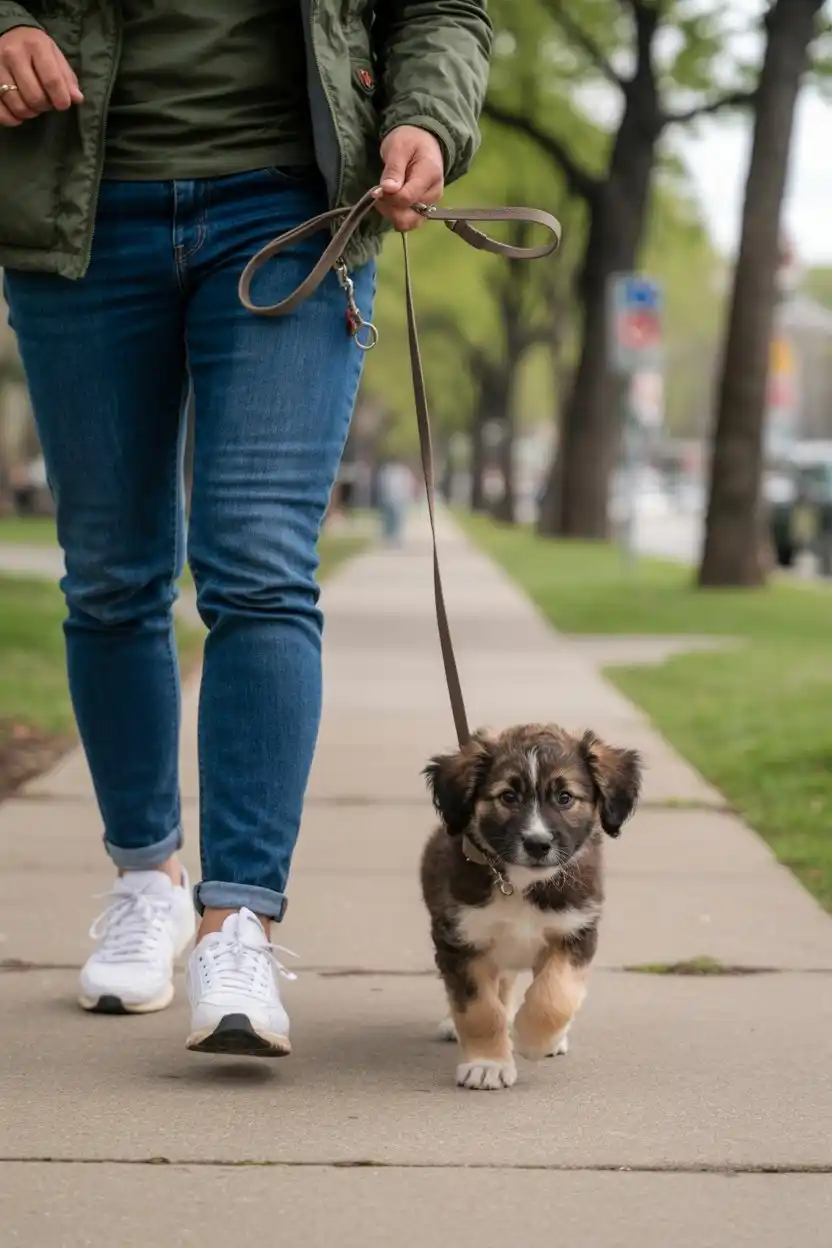
If your puppy turns every walk into a zig-zag parade—biting the leash, flopping like a fish, or pulling like a tiny sled dog—you’re not alone. Leash training puppy skills don’t “click” automatically, even for smart pups, because the outside world is basically a theme park of smells, sounds, and surprises.
The good news is you can absolutely teach polite walking without harsh corrections. With the right setup, short sessions, and consistent rewards, your puppy can learn that staying near you makes good things happen. 😊
In this guide, you’ll learn how to choose the right equipment, teach leash pressure the gentle way, build a loose-leash walk step by step, and troubleshoot common problems like pulling, freezing, and leash biting. You’ll also get a realistic timeline, so you know what progress should look like.
💡 Why This Matters ?
Leash training isn’t just about manners—it’s about safety and freedom. A puppy who walks politely is less likely to slip a collar, bolt into the street, or get tangled around kids and bicycles. Calm leash skills also make vet visits, travel, and meeting new people much easier.
It’s normal to feel frustrated when your puppy pulls nonstop or refuses to move. Many owners assume the puppy is being stubborn, but most of the time the puppy is simply overstimulated, confused, or unintentionally rewarded for pulling (because pulling works—they reach the smell).
With positive reinforcement, you’re teaching your puppy a clear “recipe”: stay close → earn rewards → keep exploring. Expect noticeable improvement in 7–14 days with daily practice, and more reliable walking in 4–8 weeks depending on age, breed, and how distracting your routes are. 🧠
🎓 Leash training puppy basics (gear, safety, setup)
Before you train the behavior, set your puppy up to succeed. The right gear prevents injuries and gives you cleaner feedback during practice.
Choose equipment designed for puppies:
- A Y-front harness that doesn’t restrict shoulders (great for small bodies).
- A 1.8 m (about 6 ft) standard leash for learning (avoid retractables early).
- A treat pouch and tiny, soft treats your puppy can swallow fast.
- Optional: a long line 5–10 m for safe outdoor practice in open areas.
Safety considerations matter more than speed:
- Keep sessions short to protect growing joints, especially under 6 months.
- Avoid busy sidewalks at first; distractions can cause pulling and fear.
- Watch for overheating (puppies can’t regulate temperature as well as adults).
Actionable training tips that make a big difference:
- Tip: Start indoors first, where “walking near you” is actually possible.
- Use a consistent cue like
let’s goright before you begin moving. - Reward position, not distance—pay your puppy for being near your leg, not for walking far.
Success indicator to look for early: your puppy starts “checking in” (glancing back at you) every few steps without you asking.
✅ Leash training puppy step-by-step (loose leash walking)
This is the simple progression that works for most puppies, especially when you keep it fun and reward-heavy.
- Teach “leash pressure = follow”
Give your puppy a tiny amount of gentle leash tension. The second they move toward the pressure, mark with “yes” and reward. Keep it slow and calm.
Common mistake to avoid: Yanking the leash to drag your puppy forward. That often creates resistance, fear, or the habit of pulling back.
- Teach the “reinforcement zone”
Pick a side (left or right) and reward when your puppy is near that leg with a loose leash. At first, you might reward every 1–3 steps. - Use the “be a tree” reset for pulling
When your puppy pulls, stop moving. Hold the leash steady (don’t reel them in). The moment the leash loosens—even slightly—mark and reward, then continue. - Add turns to prevent surfing ahead
If your puppy forges forward, turn 180∘ and cheerfully saythis way. Reward when they catch up at your side.
Practical bullet checklist for each session:
- Tip: Do 3–5 minute sessions, 2–4 times daily.
- Keep treats at knee level so your puppy’s head stays near your leg.
- End sessions on a win (one good step counts).
Realistic timeline:
- Days 1–3: understanding indoors, frequent treats.
- Week 1–2: short outdoor practice in low-distraction areas.
- Week 3–8: proofing around real-life distractions.
🏆 Leash training puppy advanced skills (distractions + troubleshooting)
Once your puppy can walk nicely in quiet places, the real work is teaching them to succeed around distractions. Think of it as “leveling up” the same skill.
Proofing plan (increase one variable at a time):
- Distance: practice slightly farther from home.
- Duration: add a few minutes only after success.
- Distractions: add them gradually (people → dogs at distance → busier routes).
Troubleshooting common issues:
- If your puppy bites the leash: Redirect to a toy, then reward calm walking. Avoid turning it into a tug game on walks.
- If your puppy freezes: kneel, encourage gently, and reward one step. Don’t drag them; fear can worsen.
- If your puppy pulls toward dogs/people: create space and reward attention on you. Distance is your friend.
- If your puppy goes wild at the door: practice “leash on/off” calmly and reward for sitting before you open it.
Advanced technique: “find it” to reset arousal
Toss a treat on the ground and say find it. Sniffing lowers intensity for many puppies, then you can restart your loose-leash walking.
Progress signs you’re on track:
- Your puppy returns to you after noticing a distraction.
- The leash stays loose most of the walk, with only brief tight moments.
- Treat frequency can drop from every few steps to every 15–30 seconds.
🎥 Video Resource Section
❓ Common Questions
Q: How long does leash training puppy walking usually take? 🕒
A: Many puppies improve in 7–14 days with daily sessions, but reliable walking around distractions often takes 4–8 weeks.
Q: Should I use a collar or harness? 🦴
A: A well-fitted harness is usually safer for puppies, especially if they lunge or pull, because it reduces neck strain.
Q: What if my puppy only pulls on the way home? 🏠
A: That’s common. Reward more on the return trip, take shorter routes, and practice calm “return walks” when your puppy isn’t already tired or overstimulated.
Q: Is it okay to practice with other dogs nearby? 🐕
A: Yes, but start far enough away that your puppy can still take treats and respond. If they can’t, increase distance.
🎉 Conclusion & Next Steps
Leash training puppy skills are built through lots of tiny wins: rewarding your puppy for being near you, stopping calmly when they pull, and practicing in easy places before expecting success on busy streets. 😊 Keep sessions short, use positive reinforcement, and treat distractions like a training level—not a test your puppy should already pass.
Your next step is to practice indoors today for 3–5 minutes, then repeat in a quiet outdoor spot tomorrow. As your puppy improves, slowly reduce treats and add real-world challenges like passing people, walking near traffic sounds, and greeting politely.