

You’re sitting on the couch, enjoying a quiet moment petting your feline friend, when suddenly—chomp! Your cat’s teeth sink into your hand, leaving you startled, hurt, and confused. If this scenario sounds familiar, you are not alone. Many cat owners struggle with biting behavior, ranging from playful “love nips” to painful, aggressive bites that draw blood. It’s one of the most common reasons pet parents feel frustrated or disconnected from their companions.
The good news is that biting is rarely a sign that your cat is “bad” or “mean.” Instead, it is almost always a form of communication or a misdirected instinct. In this guide, you will learn exactly how to train a cat not to bite using proven, positive reinforcement techniques. We will cover the root causes of biting, immediate steps to stop it, and long-term strategies to build a peaceful, bite-free relationship. By the end, you’ll have a clear roadmap to turning your feisty furball into a gentle companion.
Why This Matters for Your Cat 💡
Training your cat not to bite is about more than just saving your fingers; it is essential for their well-being and your shared bond. Unchecked biting behavior can escalate over time, turning a playful kitten into an unmanageable adult cat. Sadly, aggression is a leading reason why cats are surrendered to shelters, so addressing this early is a commitment to your pet’s lifelong security.
Learning to stop biting also deepens your understanding of your cat’s language. Often, a bite is a desperate signal that a boundary has been crossed or a need isn’t being met. By training effectively, you replace frustration with trust. You will learn to read subtle signals—like a twitching tail or flattened ears—before teeth ever come into play. The result is a happier, more confident cat who knows that they don’t need to use their teeth to be heard or to have fun.
Section 1: Understanding Why Cats Bite 🎓
Before you can stop the biting, you must understand the motivation behind it. Cats generally bite for one of three reasons: play aggression, overstimulation, or fear. Identifying which one applies to your cat is the first step toward a solution.
- Predatory Play Aggression:
Cats are natural hunters. If your cat crouches, dilates their pupils, and ambushes your ankles as you walk by, they are treating you like prey. This is common in kittens and indoor cats who don’t have enough outlet for their hunting energy. They aren’t trying to hurt you; they are trying to “hunt” you because they lack appropriate toys. - Overstimulation (Petting Aggression):
This is the “Jekyll and Hyde” moment. You are petting your cat, they are purring, and then they suddenly bite. This happens when a cat’s sensitivity threshold is breached. Repetitive stroking can create static electricity or over-sensitize their nerve endings, causing a sudden “fight or flight” reaction. The bite is their way of screaming, “Stop, that’s too much!” - Fear or Pain:
A cat in pain (such as from dental issues or arthritis) or a cat that feels cornered will bite to defend themselves. If your usually gentle cat starts biting suddenly, a vet visit is mandatory to rule out medical causes.
Section 2: Immediate Techniques to Stop Biting ✅
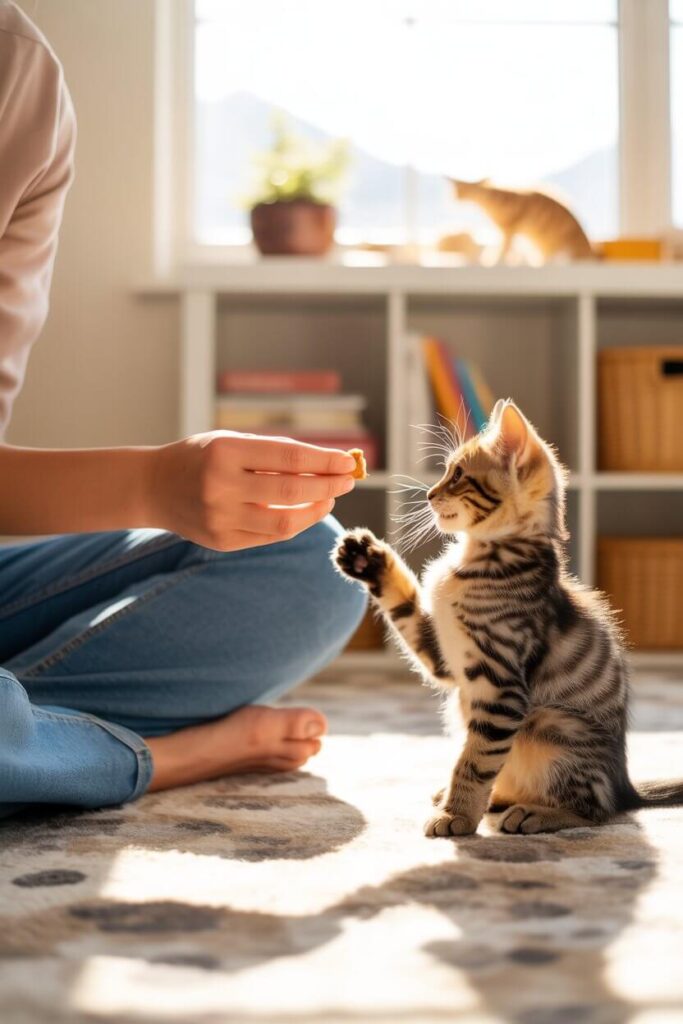
Once you understand the cause, you can apply specific techniques to curb the behavior in the moment. The golden rule of cat training is: Hands are not toys. Never use your fingers to wrestle with your cat, as this teaches them that human skin is a chew toy.
- The “Ouch” and Ignore Method:
When your cat’s teeth touch your skin, immediately let out a high-pitched “Ouch!” or a sharp yelp. This mimics the sound a littermate would make if play got too rough. After the sound, go completely limp and ignore your cat for 10-20 seconds. If they bite again, get up and leave the room. This “negative punishment” (removing your attention) teaches them that biting makes the fun stop immediately. - The Redirect Technique:
If you see your cat getting ready to pounce or bite, intercept the behavior before it happens. Grab a kicker toy or a plush animal and place it in front of them so they bite that instead. Praise them when they attack the toy. This validates their instinct to hunt but redirects it to an appropriate object. - Respecting the Threshold:
For overstimulated biters, watch for warning signs: a flicking tail, skin rippling on the back, or ears turning sideways. Stop petting before the bite happens. If you miss the signs and they bite, do not pull away quickly (which triggers a chase instinct). Instead, freeze, and when they let go, move away slowly and give them space.
Best Pet Training Products We Recommend
Product | Product Name | Rating | See Today’s Price |

| Dog Training Clicker with Wrist Strap | ; | |

| Adjustable No-Pull Dog Harness (Training & Walking) | ; | |

| Pet Training Treat Pouch (Hands-Free Snack Bag) | ; | |

| Interactive Dog Training Toy (Mental Stimulation) | ; | |

| Cat & Dog Potty Training Pads (Super Absorbent) | ; |
Section 3: Long-Term Lifestyle Changes 🏆
Training is not just about correcting bad moments; it’s about creating an environment where your cat doesn’t feel the need to bite. A bored cat is a bitey cat. Establishing a routine that satisfies their predatory drive is the most effective “cure” for aggression.
- Structured Play Therapy:
Jackson Galaxy, a renowned cat behaviorist, recommends a “Boil and Simmer” play style. Use a wand toy (like a feather on a string) to actively play with your cat for 15-20 minutes daily. Make them run, jump, and “catch” the prey. End the session with a meal or a treat. This “Hunt, Catch, Kill, Eat, Groom, Sleep” cycle mimics their natural rhythm and drains the energy that would otherwise be used on your ankles. - Enrichment and Territory:
Ensure your home has plenty of “Yes” zones. Vertical space (cat trees), scratching posts, and puzzle feeders keep a cat’s mind engaged. A cat that spends 20 minutes working to get kibble out of a puzzle ball is a cat that is too tired to ambush you later. - Consistency is Key:
Everyone in the household must follow the same rules. If you forbid biting but your partner lets the cat wrestle their hand, the training will fail. You must be 100% consistent: teeth on skin = game over, every single time.
Video Resource Section 🎥
Frequently Asked Questions ❓
Q: Will my kitten grow out of biting?
A: Not necessarily. While kittens explore with their mouths (teething), if you don’t teach them bite inhibition now, they will grow into adult cats who bite hard. You must train them while they are young that skin is sensitive.
Q: Should I use a spray bottle to punish biting?
A: No. Spray bottles often cause fear and can damage your bond with your cat. They might stop biting in the moment but will learn to bite when you aren’t holding the bottle, or they may become afraid of you rather than the behavior. Positive reinforcement and redirection are far more effective.
Q: Is my cat biting me because they hate me?
A: Extremely unlikely. Biting is communication, not malice. They are likely saying “I’m bored,” “I’m scared,” or “I’m overstimulated.” shifting your perspective from “my cat is mean” to “my cat is trying to tell me something” is key to solving the problem.
Q: How long does it take to stop the biting?
A: It depends on the cat’s age and how long the behavior has been practiced. For kittens, you might see results in a few weeks. For older cats with ingrained habits, it may take 1-3 months of consistent training to see a permanent change.
Conclusion & Next Steps 🎉
Learning how to train a cat not to bite requires patience, consistency, and a little bit of detective work. By identifying whether your cat is bored, overstimulated, or scared, you can tailor your approach to meet their needs. Remember, the goal isn’t to suppress their natural instincts but to give those instincts a healthy outlet.
Start today by removing your hands from playtime and introducing a structured 15-minute wand toy session every evening. Watch your cat’s body language closely, and celebrate the small victories like when they choose to bite their kicker toy instead of your arm. With time and love, you will transform your relationship from painful to peaceful. You’ve got this! 🐾