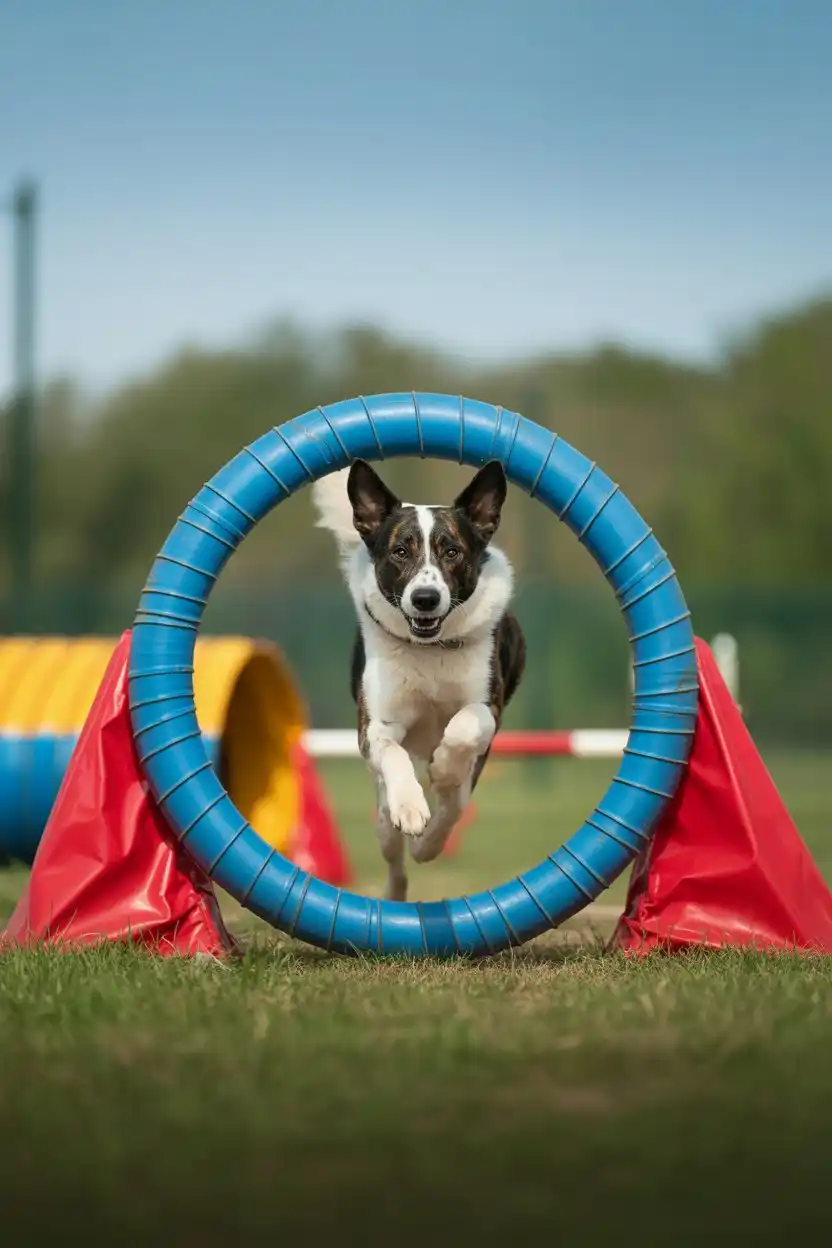
If you’ve ever watched a dog zip through tunnels, hop cleanly over jumps, and beam with pride at the finish line, you’ve seen the magic of agility. The best part is that agility training for dogs isn’t only for Border Collies or competition teams—it can be a fun, confidence-building game for your dog and a stress-relieving hobby for you, too. 🐾
Maybe your dog has tons of energy and regular walks don’t cut it. Or you want an activity that builds listening skills without feeling like “boring obedience.” Either way, agility gives you a clear plan: teach simple obstacle skills, reward effort, and slowly connect everything into mini courses.
In this guide, you’ll learn how to start safely, what equipment actually matters, and how to train step-by-step using positive reinforcement. You’ll also get troubleshooting help for common “why won’t my dog do this?” moments.
💡 Why This Matters ?
Agility is more than fast running and cute videos. When done correctly, it improves your dog’s body awareness, self-control, and trust in you. It can also reduce frustration behaviors that come from boredom—like chewing, barking at every noise, or bouncing off the walls at 9 PM.
Many owners quit early because the first sessions look messy. Your dog might avoid the tunnel, knock bars, or stare at you like you just placed an alien object in the yard. That’s normal. The goal is not perfection in week one—it’s progress you can measure.
With consistent practice, most dogs show noticeable improvement in focus and obstacle confidence in 2–4 weeks. Stronger skills and smooth sequences often take 8–12 weeks, depending on age, breed, and your practice schedule. The key is keeping sessions short, upbeat, and rewarding. ✅
🎓 Section 1: Agility Training Basics (Equipment, Safety, Setup)
Agility training for dogs starts with safety and smart setup, not speed. Before you add excitement, you want your dog comfortable moving around new objects and listening while energized.
Start with the right environment. A flat, non-slippery surface helps prevent injury. Grass is usually safer than tile or slick concrete, especially for quick turns.
Equipment can be simple at first:
- Low jumps (even broomsticks on buckets)
- Cones or chairs for “wrap” and weaving patterns
- A short tunnel or a DIY chute
- A sturdy platform (like a low step) for pause-table skills
Safety comes first, especially for puppies. Avoid full-height jumps until growth plates close (often around 12–18 months, depending on size). For puppies, focus on foundation games like targeting, balance, and confidence around objects.
Tip: Keep early obstacles “easy to win.”
- Set jump bars at ankle height or on the ground
- Use wide turns instead of tight spins
- Reward curiosity—sniffing the tunnel counts as a victory
Also, decide what motivates your dog. Many dogs learn fastest with tiny treats, but some prefer tug toys or a ball. Use what your dog truly loves, because agility is about energy plus control.
✅ Section 2: Step-by-Step Agility Training for Dogs (Beginner Plan)
You’ll get faster results if you teach skills in small pieces, then connect them. Think “one obstacle, one goal, lots of rewards.”
- Teach a start-line wait
Ask for a simple sit or stand, pause for 1 second, then release with a cue likeOK!. Reward the release, not just the stay. - Build a strong hand target
Teach your dog to touch your palm. This becomes your steering wheel when your dog is excited. - Introduce one obstacle at a time
For a tunnel, start with it short and straight. Toss a treat just inside, then a little farther, then all the way through. - Add a jump the easy way
Walk your dog over a ground bar first. Then raise it slightly once your dog is confident. - Connect two obstacles
Tunnel → jump is a great starter combo. Reward after the second obstacle so your dog learns to keep going.
Tip: Use “cookie trails” only temporarily. Fade them quickly so your dog learns to follow your body cues, not the ground.
Common mistakes to avoid:
- Raising jump height too soon (leads to fear or sloppy form)
- Repeating failures (three misses in a row means make it easier)
- Training too long (stop while your dog still wants more)
Troubleshooting (Quick Fixes)
If your dog avoids an obstacle, lower the difficulty. If your dog gets wild, add calm starts and shorter sessions. If your dog shuts down, increase reward value and celebrate micro-steps.
🏆 Section 3: Advanced Skills (Speed, Handling, Confidence)
Once your dog enjoys the game, you can develop real agility “flow.” This is where agility training for dogs becomes a teamwork sport instead of a collection of tricks.
Start teaching handling basics. Your dog learns to read your motion and follow your line. Practice:
- Front crosses (you switch sides in front of your dog)
- Rear crosses (you switch sides behind your dog)
- Sends (your dog goes ahead to an obstacle)
Add difficulty carefully. Increase only one thing at a time:
- Slightly higher jumps (for adult dogs cleared by a vet)
- More distance between obstacles
- Gentle angle changes (not sharp hairpin turns)
Tip: Reward position, not just completion. If your dog takes the jump but swings wide and loses the next obstacle, pay for a tighter line when they try again.
Success indicators you’re on the right track:
- Your dog drives forward to obstacles without hesitation
- Your dog can do a 2–3 obstacle sequence with one reward at the end
- Your dog stays engaged even when you pause or change direction
Real-world example: If your dog blasts out of the tunnel and looks away, you can add a hand target after the exit. Reward eye contact, then move the reward farther down the line as focus improves.
🎥 Video Resource Section
❓ Common Questions
Q: Can I do agility training for dogs in a small backyard? 🐕
A: Yes. Use low jumps, cone patterns, and short tunnel setups. Small spaces work well for handling and focus.
Q: How often should we practice? ⏱️
A: Aim for 3–5 sessions per week, 5–10 minutes each. Consistency beats long workouts.
Q: Is agility safe for puppies? 🐶
A: Foundation agility is great, but avoid impact jumps and tight weaving. Stick to balance games, targeting, and confidence obstacles.
Q: What if my dog is food-motivated but gets too hyped? ⚠️
A: Use calmer treats, reward after a pause, and practice start-line waits. Shorter sessions help a lot.
🎉 Conclusion & Next Steps
Agility training for dogs is one of the best ways to turn extra energy into focus, confidence, and teamwork. Start with simple equipment, keep jumps low, and use positive reinforcement to make every obstacle feel safe and rewarding. 🏆
Your next step is to pick one obstacle (tunnel or low jump), train it for 5 minutes a day for a week, then connect it to a second obstacle. If you want to level up, add handling drills like sends and gentle crosses slowly, safely, and with plenty of rewards. ✅