Dog training with hand signals can feel like a superpower the first time your dog sits without you saying a word. Maybe you’ve tried giving a cue in a noisy park, and your dog looked at you like, “I can’t hear you.” That moment is exactly where hand signals shine.
If you’ve ever wanted quieter, clearer communication (or you’ve had a sore throat and still needed your dog to listen), this approach can change your daily life. You’ll teach your dog to “read” you, not just hear you, and that builds focus fast. ✅
In this guide, you’ll learn what signals to start with, how to teach them step-by-step using rewards, and how to troubleshoot the common problems that make people quit too early.
💡 Why This Matters ?
Hand signals help your dog succeed when life gets loud, distracting, or stressful. They also help you stay consistent, because your hands can deliver the same cue shape every time in a way your voice sometimes can’t. Many dogs actually learn visual cues faster than verbal ones once you teach the pattern.
This is especially helpful if your dog gets excited and “tunes out” your voice, or if you’re working on distance control like “down” across a room. For older dogs with hearing loss, visual cues can be life-changing and keep them confident.
Expect a realistic timeline of about 7–14 days for the first cues in quiet places, and 4–8 weeks for reliable responses around distractions, depending on your consistency and your dog’s temperament. Patience matters.
🎓 Section 1: Dog Training With Hand Signals Basics (Start Here)
Dog training with hand signals works best when your dog already understands that good choices earn rewards. You’re not “forcing” behavior with your hands—you’re teaching a visual language your dog wants to follow.
Start by picking one signal per behavior and keep it consistent. If three family members use three different gestures for “sit,” your dog will hesitate or guess. Keep sessions short so your dog stays eager, not overwhelmed.
Recommended equipment makes this easier:
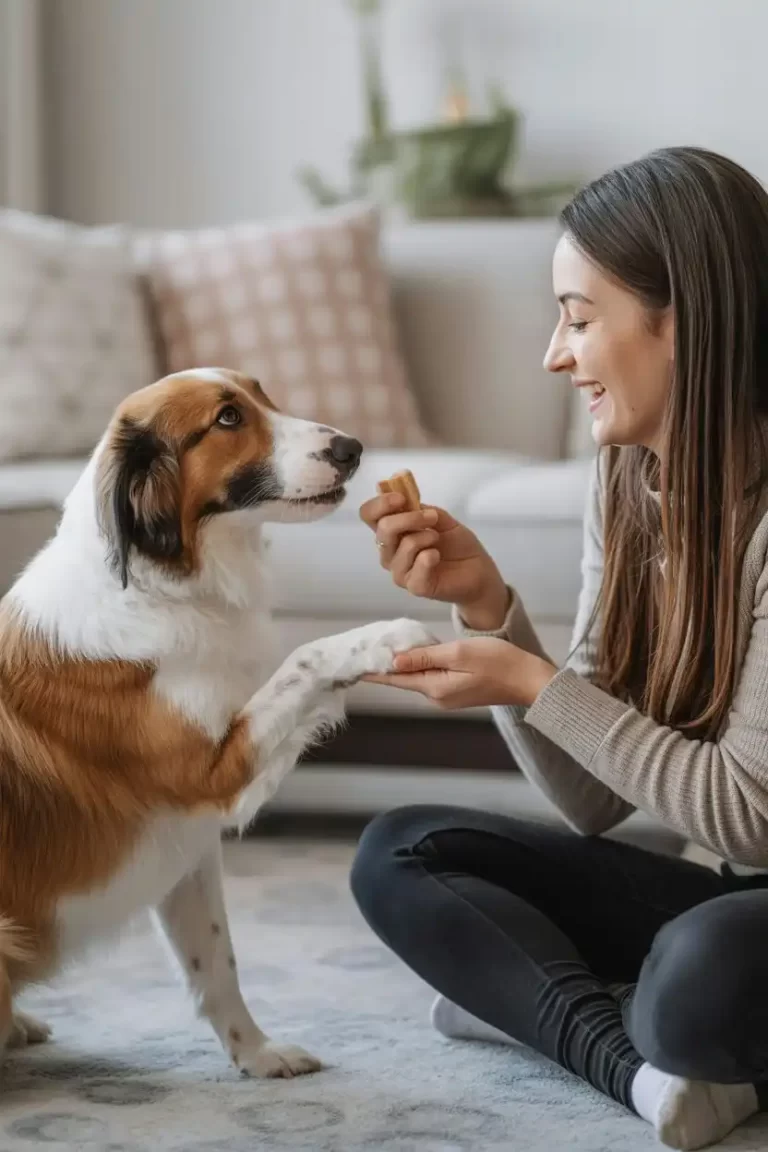
- A soft treat your dog loves (pea-sized) for reward
- A treat pouch so your timing stays fast
- A clicker (optional) to mark the exact moment your dog succeeds
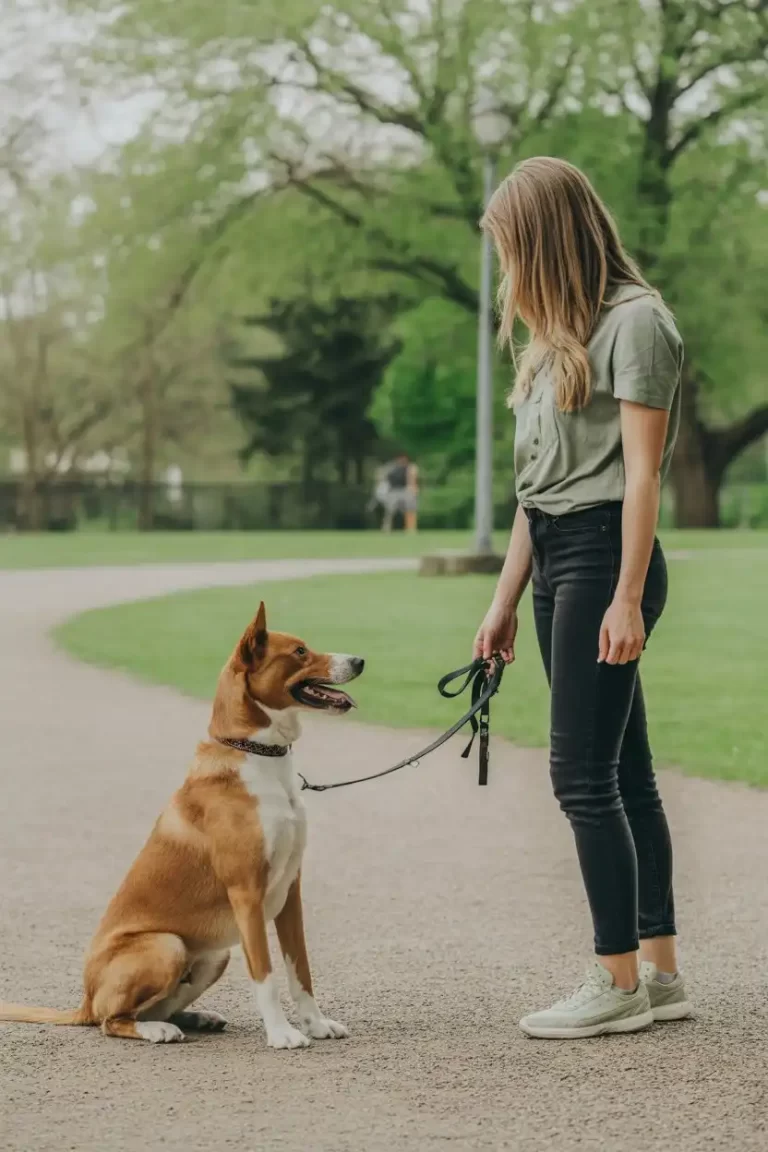
- A leash for safety if you’ll practice outdoors
Practical tips that prevent confusion:
- Use a clear “start position” (dog standing in front of you) as a routine
- Train in bright lighting so your signal is easy to see
- Pause your hands after giving a cue so you don’t “talk” with extra movements
Common starter signals (simple and visible):
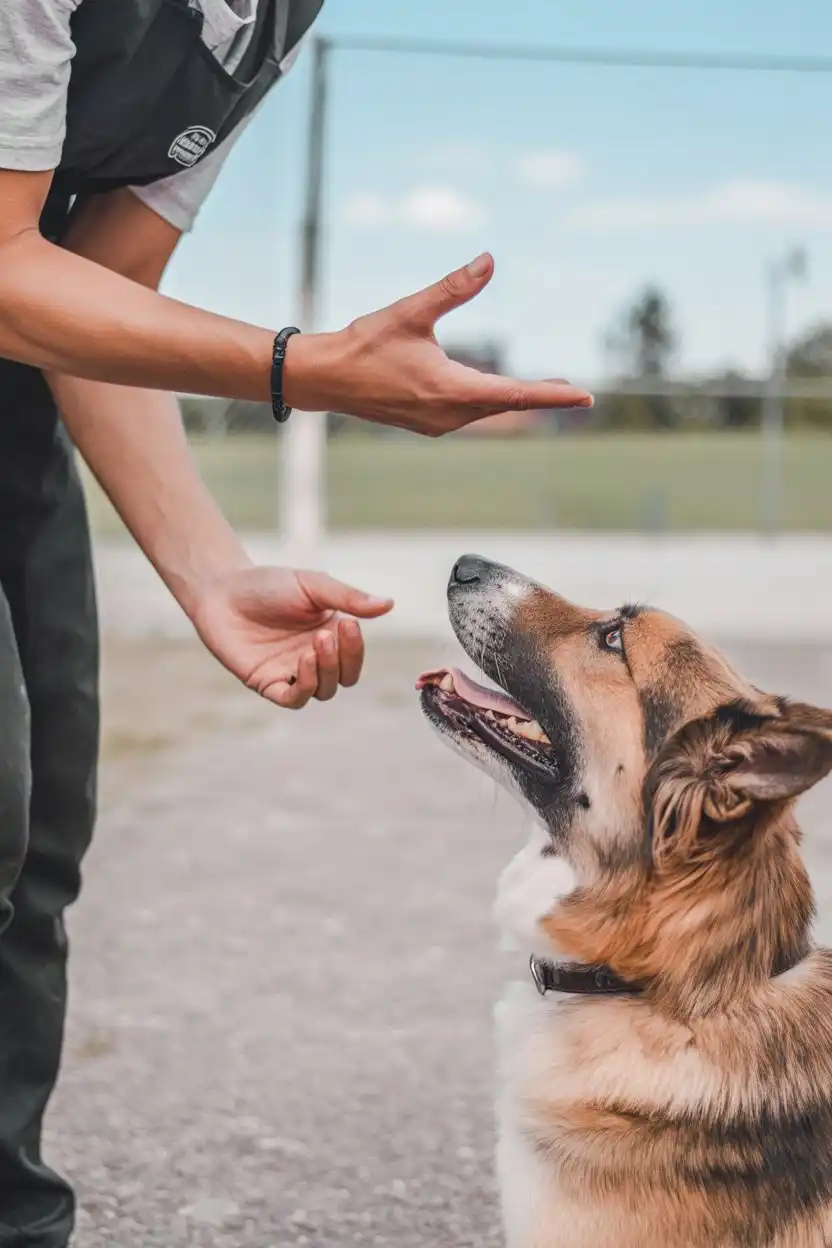
- Sit: hand moves up like you’re lifting a string
- Down: hand moves downward, palm facing the floor
- Stay: open palm facing your dog like a stop sign
✅ Section 2: Dog Training With Hand Signals Step-by-Step (Teach the Cue)
You’ll get the fastest results by pairing a hand signal with a behavior your dog already offers or can follow with a lure. Then you fade the lure and keep the signal.
Use this simple process for each new cue:
- Choose one hand signal and one behavior (like sit) for clarity
- Lure your dog with a treat if needed, moving the treat to create the behavior
- The instant the behavior happens, mark (“yes” or click) and treat
- Repeat 5–8 reps, then pause for a short break
- Start using the same motion without the treat in your fingers
- Reward from the other hand or pouch so the signal stays clean
Mistakes to avoid (these slow learning):
- Moving your hands too much after the cue, which creates noise
- Repeating the signal over and over instead of helping your dog succeed
- Training too long and watching your dog get tired or silly
Troubleshooting (Common Issues)
If your dog stares at your treat pouch and ignores your hand:
- Hide treats behind your back, then deliver after the mark for timing
- Use a lower-value treat so your dog can still think
- Practice “look at me” first to rebuild focus
If your dog only responds when you’re close:
- Reward more when your dog succeeds at 1–2 steps away for distance
- Increase space gradually, not in big jumps
- Train near a wall to reduce wandering
🏆 Section 3: Dog Training With Hand Signals Advanced Skills (Reliability)
Once your dog understands the basics, your goal is reliability in real life. That means different rooms, different people, different distances, and distractions like the doorbell.
Level up using “proofing” in small steps:
- Change one thing at a time (distance or distraction or duration) for success
- Use higher-value rewards when difficulty increases
- Practice short “mini sessions” throughout the day
Real-world examples that make hand signals practical:
- Silent “down” when guests enter so your dog doesn’t launch at the door
- Hand-signal “come” in the yard when you don’t want to yell
- “Stay” from across the kitchen while you open the oven safely
Success indicators you’re on the right track:
- Your dog responds within 2 seconds to the signal in a quiet room
- Your dog can do 3–5 reps in a row without extra prompting
- Your dog succeeds with mild distractions 70%–80% of the time
Puppies vs adult dogs:
- Puppies need more breaks and simpler goals for focus
- Adult dogs can handle slightly longer sessions, but keep rewards frequent
- Senior dogs may need bigger, slower signals if vision or joints are changing
Safety notes:
- Avoid fast hand motions near fearful dogs to prevent startle
- Don’t drill “down” repeatedly on hard floors for large breeds
- Stop sessions before frustration shows up
🎥 Video Resource Section
❓ Common Questions
Q: Should I teach hand signals or verbal cues first? 🐾
Teach either way, but many owners find signals easier first because they’re consistent. Then add the verbal cue later.
Q: My dog only listens when I’m holding a treat—what now? 🍗
Move treats to a pouch and reward after the mark. Your dog learns the signal predicts the treat, not your fingers.
Q: Can puppies learn dog training with hand signals? 🍼
Yes, and they often learn quickly. Keep sessions 2–4 minutes and end while your puppy still wants more.
Q: Will hand signals help an older dog losing hearing? 👂
Often yes. Use larger gestures, train in good lighting, and reward heavily as confidence grows.
🎉 Conclusion & Next Steps
Dog training with hand signals gives you a quiet, clear way to communicate that holds up in real life. Start with one cue, reward generously, and keep your signals consistent so your dog can “read” you easily. ✅
This week, pick sit and down, do 2–3 mini sessions per day, and track progress like response speed and focus. When that feels solid, add distance and mild distractions, then gradually work up to real-world challenges. Practice beats perfection.