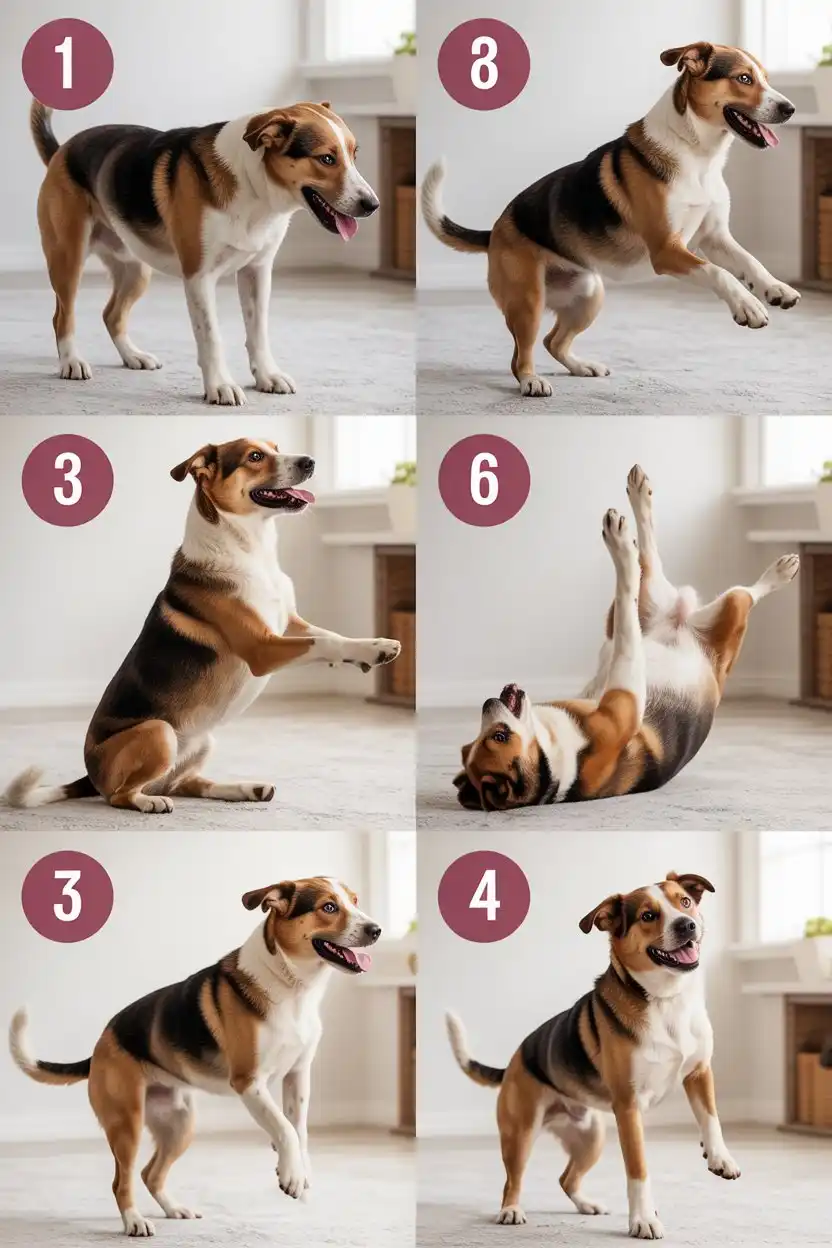
If you’ve ever grabbed a treat, said “Do a trick,” and watched your dog stare back like you’re speaking another language, you’re not alone. The good news is that dog tricks aren’t about having a “naturally talented” pup—they’re about having a clear plan you can repeat the same way every time.
In this guide to dog tricks training step by step, you’ll learn how to teach fun, reliable behaviors without yelling, chasing, or turning training into a wrestling match. 🎓 You’ll get a simple system you can use for any trick, whether you’re working with a wiggly puppy or an adult dog with strong opinions.
We’ll cover the best gear, how long sessions should be, exactly when to reward, and how to troubleshoot the most common problems (like nipping treats, wandering off, or “only doing it when food is visible”). By the end, you’ll have a realistic timeline and a short list of tricks you can start today.
💡 Why This Matters ?
Dog tricks training step by step isn’t just about showing off at the park. It builds everyday skills that make your life easier and your dog happier, especially when you rely on positive reinforcement instead of intimidation.
Trick training improves focus, confidence, and impulse control. That matters when your dog gets excited at the door, freezes on walks, or struggles to settle when guests arrive. Tricks also give you a “job” to offer your dog when they’re bored, which can reduce chewing, barking, and attention-seeking behaviors.
It also strengthens your relationship in a way that feels fun. When your dog learns “touch,” “spin,” or “paw,” they’re really learning how to learn—and that carries over into leash work, recall, grooming cooperation, and polite greetings. ✅
Set expectations, though: progress is rarely perfectly linear. Puppies may learn fast but get distracted easily, while adult dogs may learn a bit slower but show steadier self-control. With consistent practice, most dogs can learn several beginner tricks in 7–21 days, and start looking reliably trained in 4–8 weeks.
🎓 Section 1: Dog tricks training step by step basics (gear, timing, rules)
The foundation of dog tricks training step by step is a reward system your dog understands instantly. You want your dog thinking, “When I do that, good things happen,” and you want them confident enough to keep trying.
Start with treats your dog truly loves. For many dogs, tiny pieces of chicken, cheese, or soft training treats work better than crunchy biscuits. Keep pieces pea-sized so you can reward often without overfeeding.
Choose a reward marker. That can be a clicker or a short word like “Yes.” A good marker tells your dog the exact moment they got it right, even if the treat arrives a second later.
Use these baseline rules to keep training smooth:
- Train when your dog is a little hungry, not right after a big meal.
- Keep sessions short: 3–5 minutes for puppies, 5–8 minutes for most adults.
- End on a win, even if it’s a super easy repetition.
- Practice in a quiet spot first, then gradually add distractions.
Safety matters more than flashy tricks. Protect your dog’s joints by avoiding repeated jumping, tight spins on slippery floors, or long “stay” positions for very young puppies. Use a non-slip mat if you have tile or hardwood, and keep the room safe by clearing cords and clutter.
Age considerations help you pick smarter goals:
- Puppies 8–16 weeks: focus on “touch,” “sit,” “down,” “look,” and gentle handling games.
- Adult dogs: you can add “roll over,” “spin,” and trick chains once basic focus is solid.
- Senior dogs: choose low-impact tricks like “chin rest,” “target,” and “find it.”
Practical tips you can use today:
- Keep treats in your non-dominant hand so your cue hand stays consistent.
- Reward position, not excitement—if your dog jumps for treats, reward only when paws are down.
- If your dog gets frustrated, lower difficulty fast and rebuild with patience.
✅ Section 2: Dog tricks training step by step method (teach any trick)
This is the repeatable system behind dog tricks training step by step. Once you learn it, you can apply it to “shake,” “spin,” “bow,” “high five,” “play dead,” and more—without needing a new strategy every time.
Here’s the core step-by-step process:
- Pick one trick and define what “finished” looks like (for example, “spin” = one full circle to the left).
- Capture or lure the behavior (capture = reward when it happens naturally; lure = guide with a treat).
- Mark the exact correct moment with your click or “Yes.”
- Reward immediately, then reset your dog to try again.
- Repeat until your dog offers the behavior smoothly 8 out of 10 times.
- Add a cue word after the behavior is predictable (example: say “Spin,” then lure the circle).
- Fade the lure by turning the treat lure into an empty-hand gesture.
- Practice in new rooms, then outdoors, then around mild distractions.
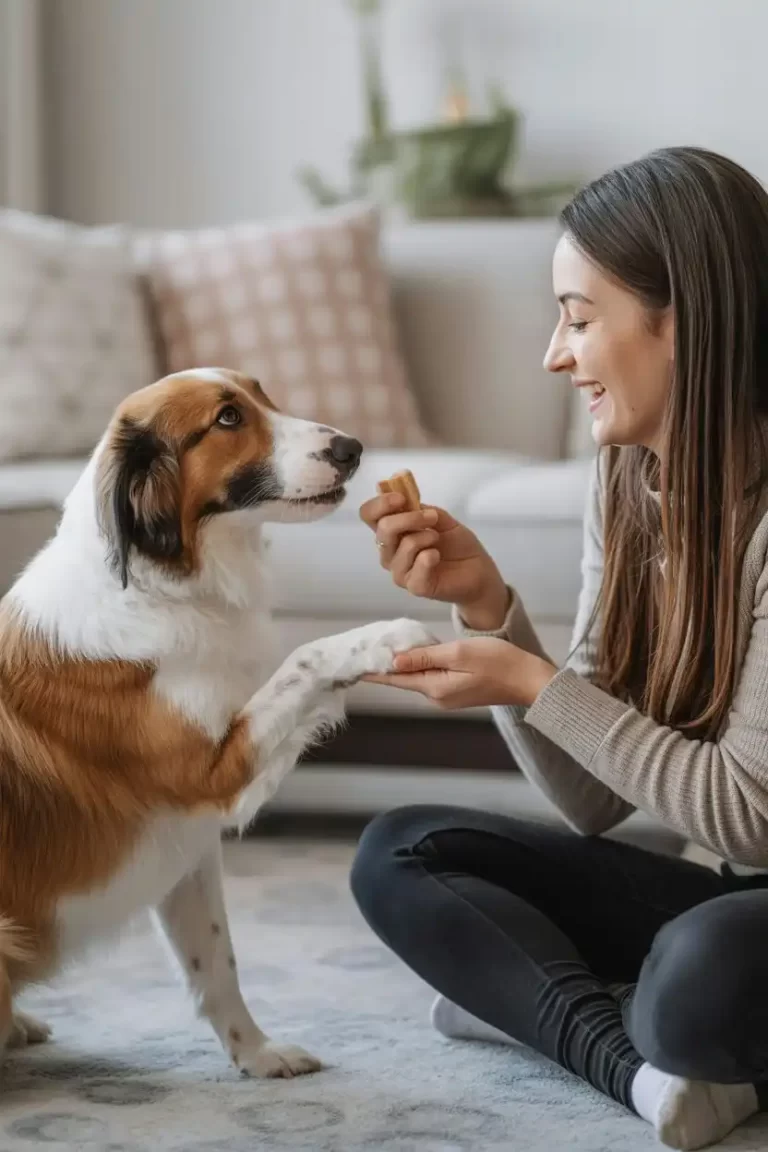
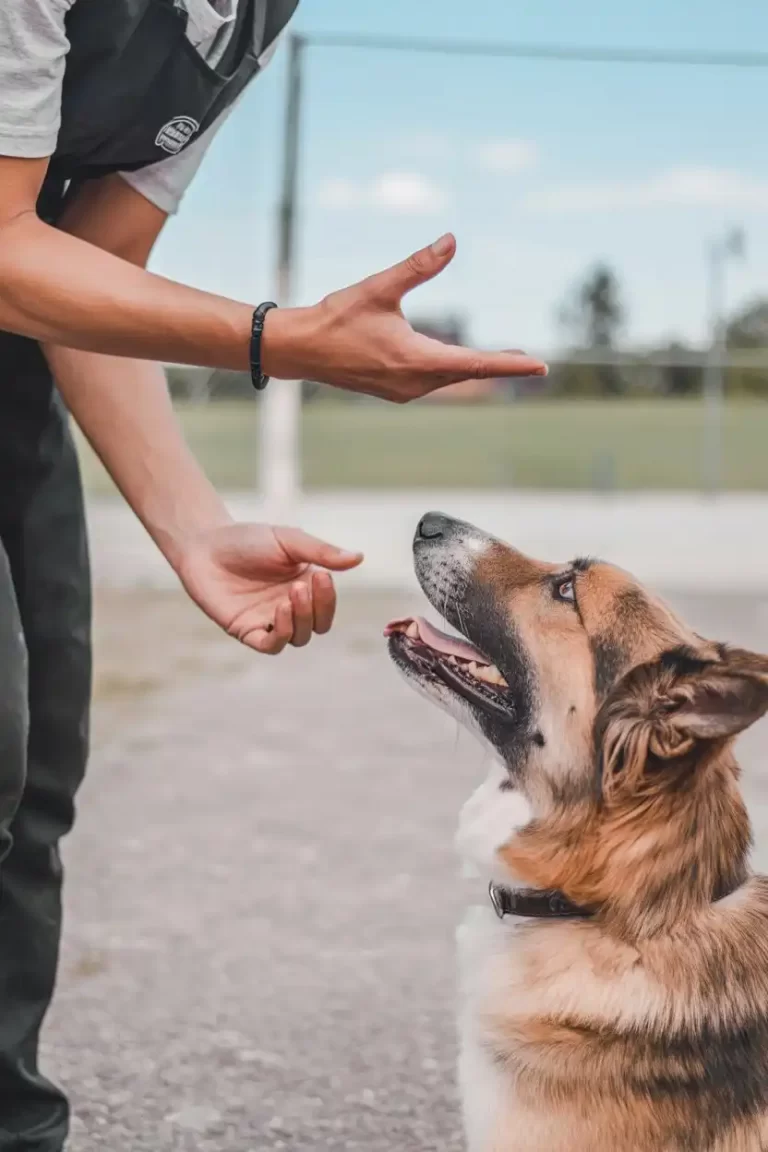
If you want a quick “starter trick,” teach “touch” (nose to palm). It’s simple and becomes a tool for guiding your dog into positions later. Use your open hand like a target, mark when the nose bumps, then reward.
Common mistake to avoid: adding the cue too early. If you say “Spin, spin, spin” while your dog is still guessing, the cue becomes background noise. Wait until the motion is consistent, then attach the word once.
Troubleshooting problems (fixes that work fast):
- If your dog bites at the treat, deliver rewards from a flat palm and slow your hand movement.
- If your dog wanders off, your rewards aren’t valuable enough or sessions are too long.
- If your dog only performs when treats are visible, hide treats in a pouch and reward from the other hand.
- If your dog gets zoomy, switch to calm tricks like “chin rest” and reward slower breathing.
Equipment that makes this easier:
- Treat pouch for speed and consistency.
- Clicker (optional) for precise timing.
- Non-slip mat for spins, bows, and downs.
- 4–6 ft leash for low-distraction practice outdoors.
🏆 Section 3: Advanced dog tricks training step by step (reliability + real life)
Once your dog understands the basics, “advanced” training is mostly about reliability. That means your dog can do the trick when the environment changes, when you move differently, or when they’re excited.
A powerful next layer is proofing. That’s practicing the same trick while changing one variable at a time: distance, distraction, duration, or your body position. Keep progress small so your dog keeps winning.
Try these advanced techniques:
- Variable rewards: after the trick is solid, reward every 2nd or 3rd rep instead of every time.
- Add a release word: teach “Okay” so your dog understands when the trick is finished.
- Build tiny chains: combine “touch → spin → sit” and reward at the end.
- Use life rewards: sometimes the reward is going outside, greeting a friend, or throwing a toy.
Real-world examples that make tricks practical:
- “Touch” helps you guide your dog past a scary object on walks.
- “Find it” turns hallway chaos into a scent game when you need calm.
- “Place” (go to mat) becomes your go-to behavior when guests arrive.
Watch for success indicators so you know you’re on track:
- Your dog starts offering the behavior without you luring first.
- Response time gets faster (they do it within 1–2 seconds of the cue).
- Your dog can perform in a new room with only one or two “warm-up” reps.
- Your dog stays engaged for the whole session with relaxed body language.
Keep training kind and sustainable. If your dog shows stress signals (lip licking, yawning, tucked tail, avoiding you), lower the difficulty and reward simpler choices. Kindness builds confidence, and confidence builds speed.
Timeline to expect for reliable tricks:
- Week 1: your dog understands the motion in a quiet room.
- Weeks 2–3: your dog responds to the cue reliably at home.
- Weeks 4–8: your dog performs with mild distractions and less frequent treats.
🎥 Video Resource Section
❓ Common Questions
Q: What if my puppy can’t focus for more than 30 seconds? 🐶
A: That’s normal. Use 30–60 second micro-sessions, reward fast, and stop before they melt down.
Q: Can I do dog tricks training step by step without treats? 🍖
A: Treats speed learning, especially early. Later you can mix in toys, praise, and life rewards, but keep food as your most reliable option during new skills.
Q: My adult dog knows “sit,” but refuses new tricks. Why? 🤔
A: Many adult dogs hesitate because guessing feels risky. Reward tiny attempts (a head turn, a paw lift) so your dog learns that trying is safe.
Q: How many tricks should we work on at once? 🎯
A: Start with one new trick at a time, plus one easy “confidence trick” your dog already knows to keep motivation high.
🎉 Conclusion & Next Steps
Dog tricks training step by step works best when you keep sessions short, rewards meaningful, and your criteria clear. Pick one beginner trick, follow the same teach-any-trick method, and focus on calm repetition instead of rushing. ✅
Today, choose either “touch” or “spin,” practice for 5 minutes, and stop while your dog still wants more. Over the next 2 weeks, add the cue, fade the lure, and practice in one new location at a time. 🎓
When your first trick is reliable, level up by chaining two tricks together and slowly reducing treat frequency while still rewarding great effort. If you want, I can also build a 14-day trick plan customized to your dog’s age, breed, and energy level.