
Bringing home a new puppy is pure joy… until you’re standing in your socks, realizing your “perfect angel” just had an accident again and is now chewing the coffee table. If you’re wondering how to train a puppy without feeling overwhelmed, you’re not alone.
The good news is that puppy training isn’t about being “strict” or having a dominant personality. It’s about building clear communication, rewarding the behaviors you want, and preventing the chaos you don’t want. 🐾
In this guide, you’ll learn how to train a puppy using positive reinforcement, how to set up your home for success, what to teach first, and how to handle common problems like biting, potty accidents, and pulling on leash. You’ll also get a realistic timeline, so you can stop guessing whether you’re “behind.”
💡 Why This Matters ?
Learning how to train a puppy early makes your life easier and helps your dog feel safer. Puppies don’t come pre-programmed with house rules. They repeat what works, and they drop what doesn’t.
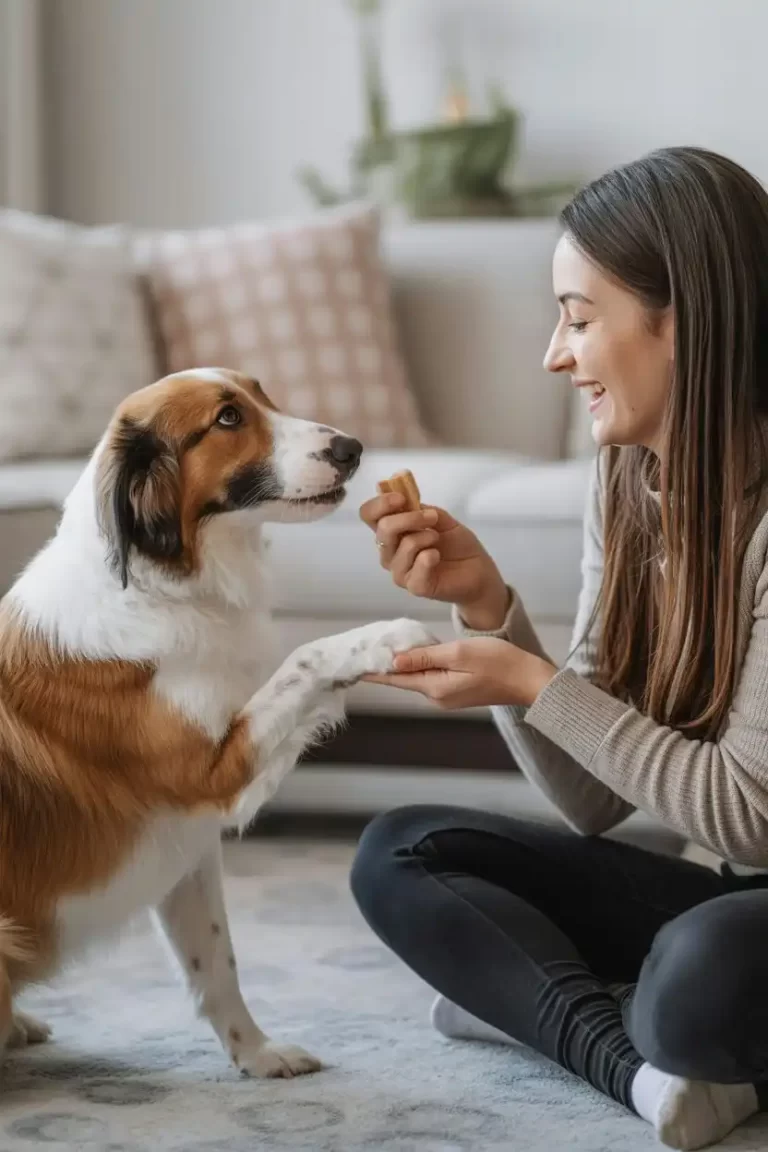
When you use positive reinforcement, your puppy learns that paying attention to you is rewarding. That builds trust and reduces fear-based behaviors later. ✅
Training also prevents small issues from becoming big ones. Jumping can become knocking people over. Nipping can become painful mouthing in adolescence. Potty accidents can turn into a habit if your puppy keeps getting “practice.”
Expect progress in days, not perfection. Most owners see noticeable improvement within 7–14 days when they’re consistent, and major reliability in 4–8 weeks—especially for basics like name response, sit, and a potty routine. 🧠
🎓 How to train a puppy basics ?
If you want to know how to train a puppy efficiently, start by controlling the environment. Puppies learn fastest when they can’t rehearse unwanted behaviors like chewing shoes or sprinting around the house during zoomies.
Use management tools so your puppy spends time in “safe zones” you can supervise. That might be a crate, an exercise pen, or a gated puppy-proof room. Safety matters here because chewing cords, swallowing socks, or slipping out a door can become emergencies fast.
Here’s a simple foundation setup that makes training easier:
- Crate for naps, overnight sleep, and short calm breaks (never as punishment)
- Baby gates or an exercise pen to limit roaming
- Chew toys (rubber, nylon, or puppy-safe edible chews)
- Enzymatic cleaner for accidents (regular cleaners leave odor cues)
- Treat pouch and tiny soft treats for fast rewards
Practical tips that immediately help:
- Tip: Reward calm behavior you like (lying down, chewing a toy) so calm becomes valuable.
- Tip: Keep sessions short—3–5 minutes—then stop while your puppy still wants more.
- Tip: Feed meals in training games (hand-feed some kibble for focus and name response).
Age note: young puppies (8–16 weeks) learn quickly but tire fast. Adult dogs can learn the same skills, but you may need more repetition and slower exposure to new environments.
✅ How to train a puppy daily ?
A reliable routine is the secret behind how to train a puppy without constant frustration. Puppies thrive when the day is predictable: potty, play, train, rest repeat.
Use this step-by-step daily training framework:
- Pick 2–3 skills to focus on this week (example: name, sit, potty routine).
- Train right before meals when motivation is high.
- Mark the correct behavior with a consistent word like
yes. - Reward immediately within 1 second.
- End sessions after 5–10 successful reps.
For potty training (a core part of how to train a puppy at home):
- Take your puppy out after waking, eating, drinking, and play.
- Go to the same spot and stand still.
- The moment they finish, say
yesand reward outside. - Bring them back in after the reward, not before.
Common mistakes to avoid:
- Mistake: Waiting for your puppy to “tell you” they need to go before a routine is established.
- Mistake: Punishing accidents, which often teaches your puppy to hide from you instead of learning the right place.
- Mistake: Training when your puppy is overtired (that’s when biting and zoomies spike).
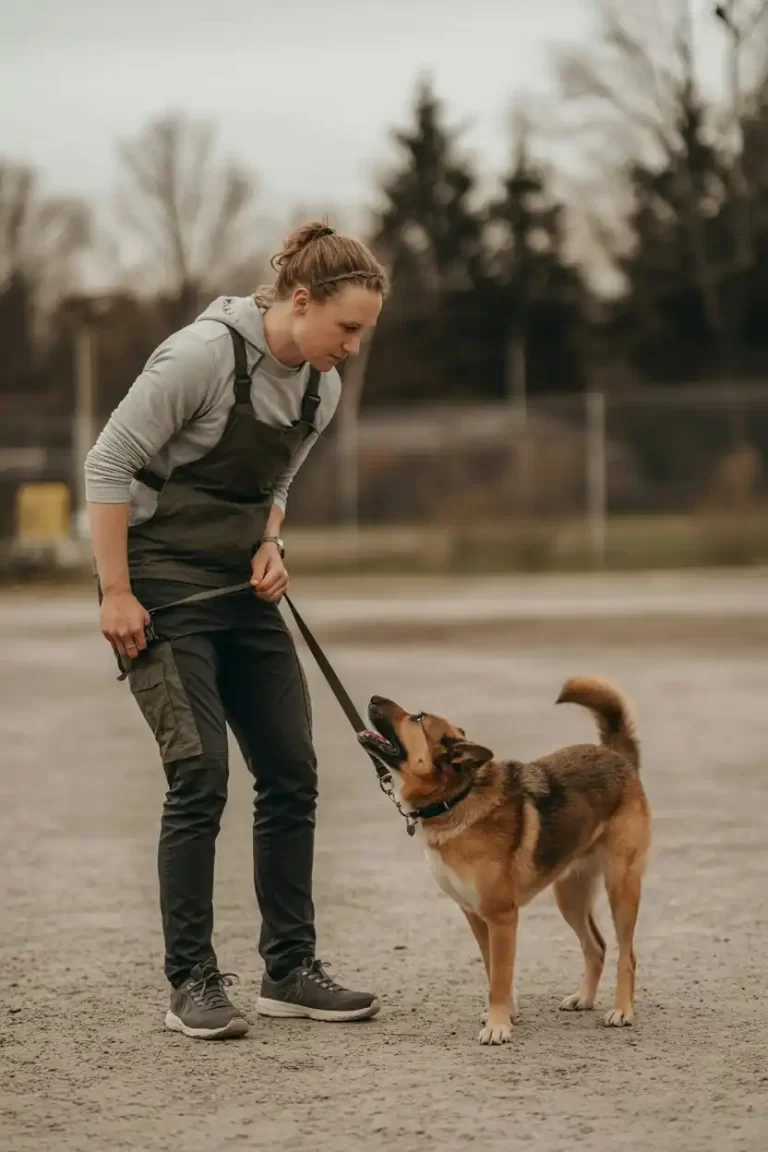
Equipment note: for leash work, use a front-clip harness or flat collar (avoid choke/prong tools for puppies). Keep a lightweight leash (4–6 feet) and skip retractables during training.
🏆 How to train a puppy long-term ?
Once your puppy understands basics at home, the real test is distractions. Dogs don’t generalize well, so “sit” in the kitchen doesn’t automatically mean “sit” in the park.
To level up how to train a puppy for real life, gradually add difficulty:
- Increase distance (you take one step back)
- Increase duration (hold sit for 2 seconds, then 5)
- Increase distractions (a toy on the floor, a family member walking by)
Advanced techniques that make training smoother:
- Focus: Teach a quick “check-in” by rewarding eye contact every time your puppy looks at you on walks.
- Trade: Prevent resource guarding by exchanging items for treats, then giving the item back.
- Settle: Reward your puppy for relaxing on a mat during dinner or work calls.
Real-world example: if your puppy jumps on guests, don’t just say “no.” Ask for an incompatible behavior like “sit,” then reward heavily when paws stay on the floor.
Success indicators you’re on track:
- Progress: Your puppy turns to you when they hear their name 8 out of 10 times.
- Progress: Accidents reduce weekly, and your puppy starts heading toward the door.
- Progress: Biting becomes softer and shorter, with faster recovery when redirected.
⚠️ Troubleshooting
If you’re doing everything “right” and it still feels messy, you’re normal. Puppy training isn’t linear, and setbacks often come from tiredness, overstimulation, or unclear rewards.
Try these quick fixes:
- Reset: If your puppy is wild, guide them to a nap (most puppies need 18–20 hours sleep/day).
- Reduce: Make the environment easier (fewer rooms, fewer temptations, more supervision).
- Upgrade: Use better treats in harder settings (tiny chicken bits beat plain kibble outdoors).
If biting is intense, pair redirection (toy in mouth) with short breaks. If you suspect pain, stomach issues, or persistent fear, talk to a veterinarian or certified trainer.
🎥 Video resource
❓ Common questions
Q: How long does it take to learn how to train a puppy well? 🕒
A: Most puppies show clear progress in 1–2 weeks with daily practice, and solid basics in 4–8 weeks.
Q: What if my puppy won’t take treats? 🍗
A: Try higher-value soft treats, reduce distractions, and train before meals. Some puppies prefer toys or praise.
Q: Can I use the same approach for an adult rescue dog? 🐕
A: Yes, positive reinforcement works for all ages. Adult dogs may need slower introductions and more repetition.
Q: Should I punish biting or accidents? ⚠️
A: Skip punishment. Redirect biting to a toy and prevent accidents with routine and supervision.
🎉 Conclusion & next steps
If you’ve been stressing about how to train a puppy “the right way,” focus on three things: manage the environment, reward what you like, and practice tiny sessions every day. Consistency beats intensity, and your puppy will learn faster than you think. ✅
Start this week with a simple routine: potty schedule, name response, and sit for attention. Then build toward calm leash walking, settle on a mat, and reliable cues around distractions. If you want faster results, track progress daily and increase difficulty gradually. 🐾