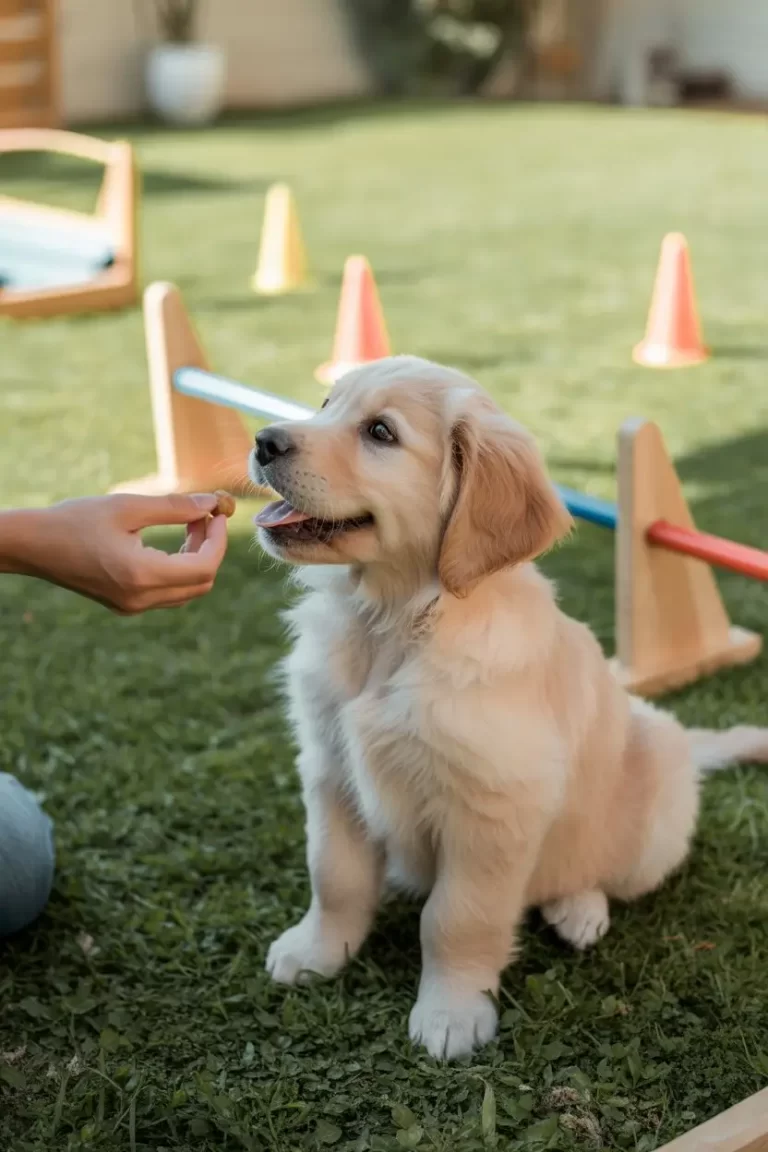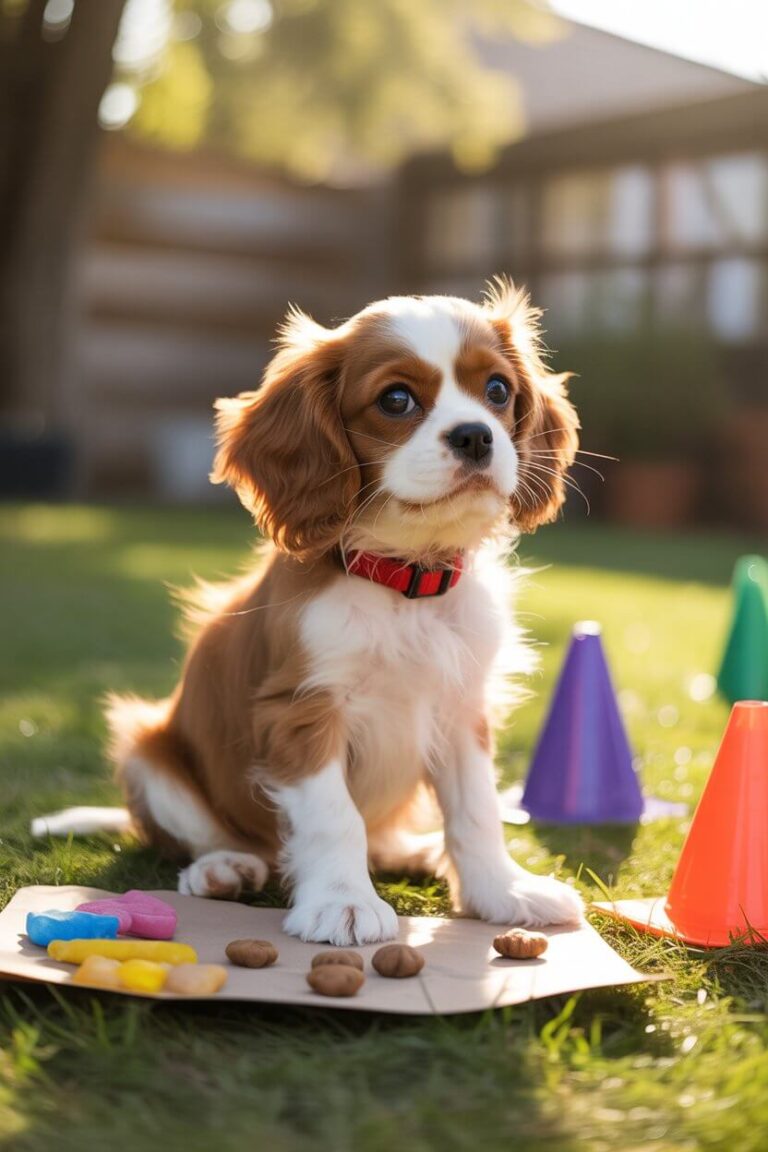
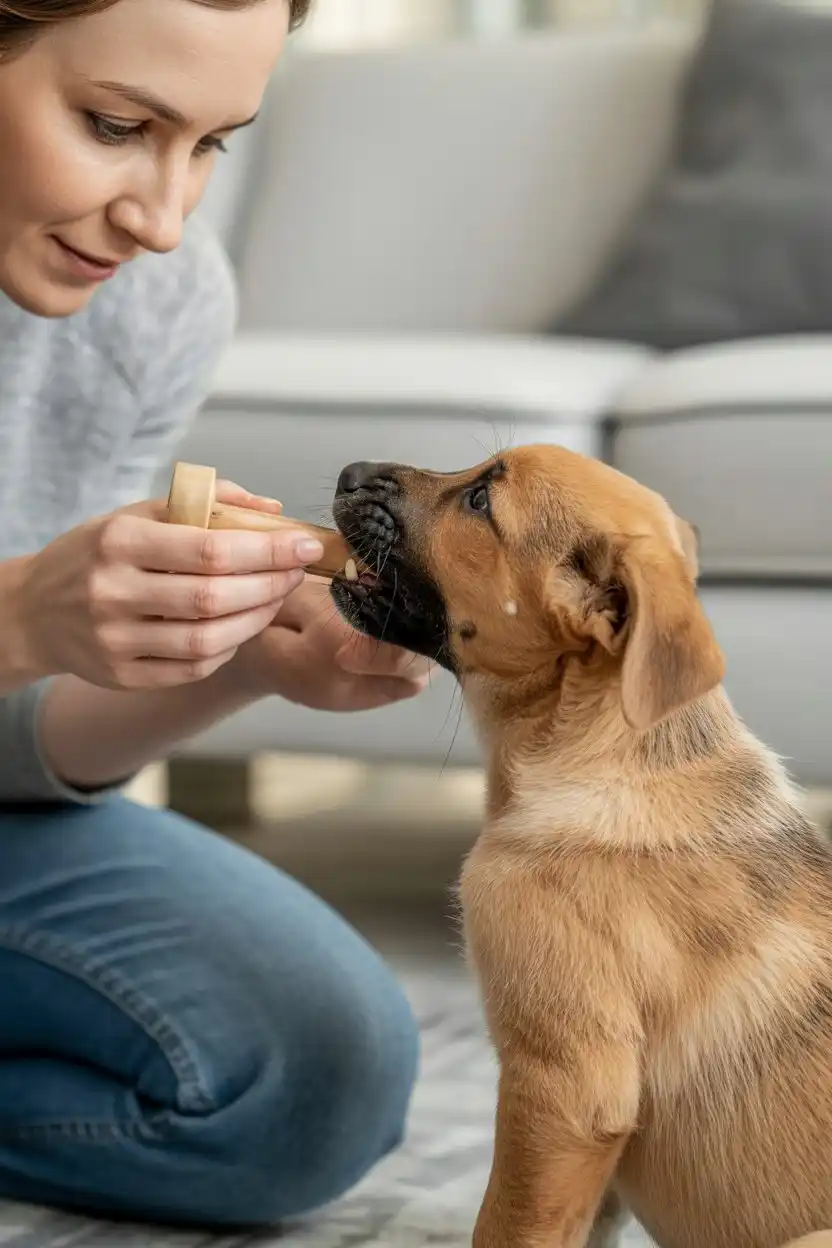
If you’re reading this with a tiny shark attached to your sleeve, you’re not alone. Puppy teeth are sharp, your hands are interesting, and your pup has no idea what “too hard” means yet. That’s why puppy biting training tips matter most in the first weeks at home—before “cute nips” become a frustrating daily habit. 🦷
The good news is that biting is normal puppy behavior, especially during teething and high excitement. Your job isn’t to “stop biting forever” overnight—it’s to teach bite inhibition, offer legal things to chew, and show your puppy how to calm down.
In this guide, you’ll learn how to reduce nipping using positive reinforcement, simple routines, and a few game-changing management tools. You’ll also get step-by-step techniques, common mistakes to avoid, and signs you’re making real progress.
💡 Why This Matters ?
Nipping feels personal, but it’s usually just puppy communication plus a lack of impulse control. When you follow puppy biting training tips consistently, you teach your dog a lifelong skill: using their mouth gently and choosing appropriate outlets.
This matters for your comfort, but it’s also about safety. A puppy who learns “soft mouth” grows into an adult dog who can take treats gently, play nicely, and handle exciting moments without grabbing skin. ✅
It also saves your relationship with your dog. Many owners accidentally reinforce biting by squealing, wrestling with hands, or moving too fast. Then the puppy learns, “Biting makes the fun happen.”
Expect a realistic timeline. Many puppies show improvement in 2–4 weeks with consistent practice, but teething can cause temporary backslides until about 5–6 months. If you stay calm and predictable, you’ll see steady progress.
🎓 Section 1: Puppy biting training tips—Why puppies bite
Biting is how puppies explore the world. They don’t have hands, so their mouth becomes their main tool for investigation, play, and soothing discomfort.
Most nipping spikes during:
- Teething roughly \(12–24 weeks)
- Evening “zoomies” when overtired
- Fast-moving play with kids, sleeves, or dangling shoelaces
- Overstimulation during cuddles when the puppy really wants play
Your first goal is not perfection—it’s prevention plus practice. If your puppy keeps rehearsing biting, it becomes a habit. If you reduce opportunities, learning speeds up.
Try these practical tips right away:
- Tip: Carry a toy on you so you can redirect in one second, not ten
- Use a playpen or baby gate during high-energy hours to prevent “chase and bite” routines
- Reward calm moments with tiny treats so your puppy learns that relaxing works
Equipment that helps a lot:
- A soft tug toy (long enough to keep teeth away from fingers)
- A rubber chew (like a stuffed durable chew toy)
- A treat pouch so rewards are instant
- A lightweight house leash for safe, gentle guidance indoors
Safety note: avoid grabbing your puppy’s muzzle shut or “alpha rolling.” Those methods can increase fear and make mouthiness worse over time.
✅ Section 2: Puppy biting training tips—Step-by-step training that works
You’ll get faster results when you use the same response every time your puppy bites skin. Choose one main method and stick to it for at least a week before changing strategies.
Here’s a simple step-by-step plan using positive reinforcement and clear boundaries:
- Present a toy before hands become the target
- If teeth touch skin, freeze for 2 seconds (no talking, no movement)
- Redirect to a toy and praise softly
- If biting continues, do a “reverse timeout” by calmly leaving for 10–20 seconds
- Return and immediately reward gentle play
That “reverse timeout” is powerful because it teaches: Biting makes fun stop, gentle play makes fun continue.
Common mistakes to avoid:
- Mistake: Wiggling your fingers to “test” your puppy, which turns you into a squeaky toy
- Saying “no” repeatedly without showing the puppy what to do instead
- Pulling your hand away fast, which triggers chase and bite instincts
- Keeping play going when your puppy is clearly overtired
Helpful phrases and cues:
gentle(reward the moment the mouth softens)leave it(teach separately with treats, then apply to hands later)all done(signals play is ending before overstimulation)
If kids are involved, keep it simple: no running, no squealing, and always hold a toy during play. Supervise closely because puppy teeth + quick child movement is a predictable recipe for nips.
🏆 Section 3: Puppy biting training tips—Advanced skills for long-term success
Once your puppy is improving with redirection and reverse timeouts, you can level up. Advanced training helps in real life: greetings, leash walks, and excitement spikes.
Focus on three skills:
- Settle on a mat (reward calm body language)
- Impulse control games (like “take it / drop it”)
- Handling practice (touch paws/ears briefly, reward, stop before puppy gets mouthy)
Real-world example: your puppy nips when you clip the leash. Instead of wrestling, you teach a routine.
- Put the leash down
- Wait for your puppy to pause
- Mark the pause with “yes”
- Reward, then clip calmly
Success indicators to watch for:
- Your puppy starts grabbing toys instead of hands during excitement
- Bites become softer and less frequent
- Your puppy pauses when you freeze or say
gentle - Recovery is faster after zoomies (they calm down sooner)
Troubleshooting common issues
If your puppy bites harder when you yelp, stop yelping. Many puppies interpret squeals as exciting play.
If your puppy bites most when tired, add enforced rest:
- 1 hour nap after 45–60 minutes awake (age-dependent)
- Quiet chew in a crate or pen to downshift energy
If you suspect pain (sudden intense biting, not eating, swollen gums), talk to your vet. Teething is normal, but you still want to rule out discomfort that needs treatment.
🎥 Video Resource Section
❓ Common Questions
Q: Should I punish my puppy for biting? 😬
A: Skip punishment. It can create fear and doesn’t teach the right behavior. Use redirection, reverse timeouts, and rewards for gentle play.
Q: When will puppy biting stop? 🗓️
A: Many pups improve in 2–4 weeks with consistency, but teething can last until about 6 months. Expect gradual progress, not overnight change.
Q: What if my puppy bites only me and not my partner? 🙋♀️
A: Puppies learn patterns. If you move faster, play rougher, or react more, your puppy may target you. Use the same routine and have your partner follow it too.
Q: Does this work for adult dogs that mouth? 🐶
A: Yes, but adults often need more management and impulse-control work. Use the same structure—redirect, reinforce calm, remove attention—but consider a trainer if intensity is high.
🎉 Conclusion & Next Steps
Puppy biting is normal, but you can shape it fast with puppy biting training tips that focus on consistency, prevention, and positive reinforcement. 🐾 Your most effective tools are quick redirection, reverse timeouts, and rewarding calm behavior before biting starts.
Start today by carrying a toy, practicing “freeze then redirect,” and adding rest breaks when your puppy gets wild. Track progress weekly, not hourly, and celebrate softer bites and quicker recovery as real wins.
If you want to go further, your next step is teaching leave it, drop it, and a mat settle—those skills dramatically reduce mouthy moments in everyday life.