
Let’s be honest, the classic tuna melt or salad sandwich is a lunchtime staple for a reason. It is quick, affordable, and usually pretty satisfying. However, the traditional version often relies heavily on mayonnaise, which can make the meal feel heavy and greasy. By swapping out the mayo for Greek yogurt, you get a sandwich that tastes lighter, brighter, and offers a much better nutritional profile.
This version keeps all the creamy texture you crave but adds a subtle tang that actually complements the fish better than plain mayonnaise ever could.
What Makes This Special ?
The magic of this recipe lies in the Greek yogurt. When you use mayonnaise, you are primarily adding oil and egg yolks, which provides richness but not much depth of flavor. Greek yogurt, on the other hand, brings a natural acidity and tartness. This acidity cuts right through the strong flavor of the canned tuna, resulting in a cleaner, fresher taste.
Another reason this recipe stands out is the texture. Greek yogurt is naturally thick and velvety. It binds the ingredients together perfectly without making the bread soggy as quickly as oil-based dressings might. It also transforms a standard sandwich into a protein powerhouse. Since both the tuna and the yogurt are high in protein, this lunch will keep you full for hours, preventing that dreaded mid-afternoon energy crash. It is the perfect balance of comfort food and fuel.
What You’ll Need ?
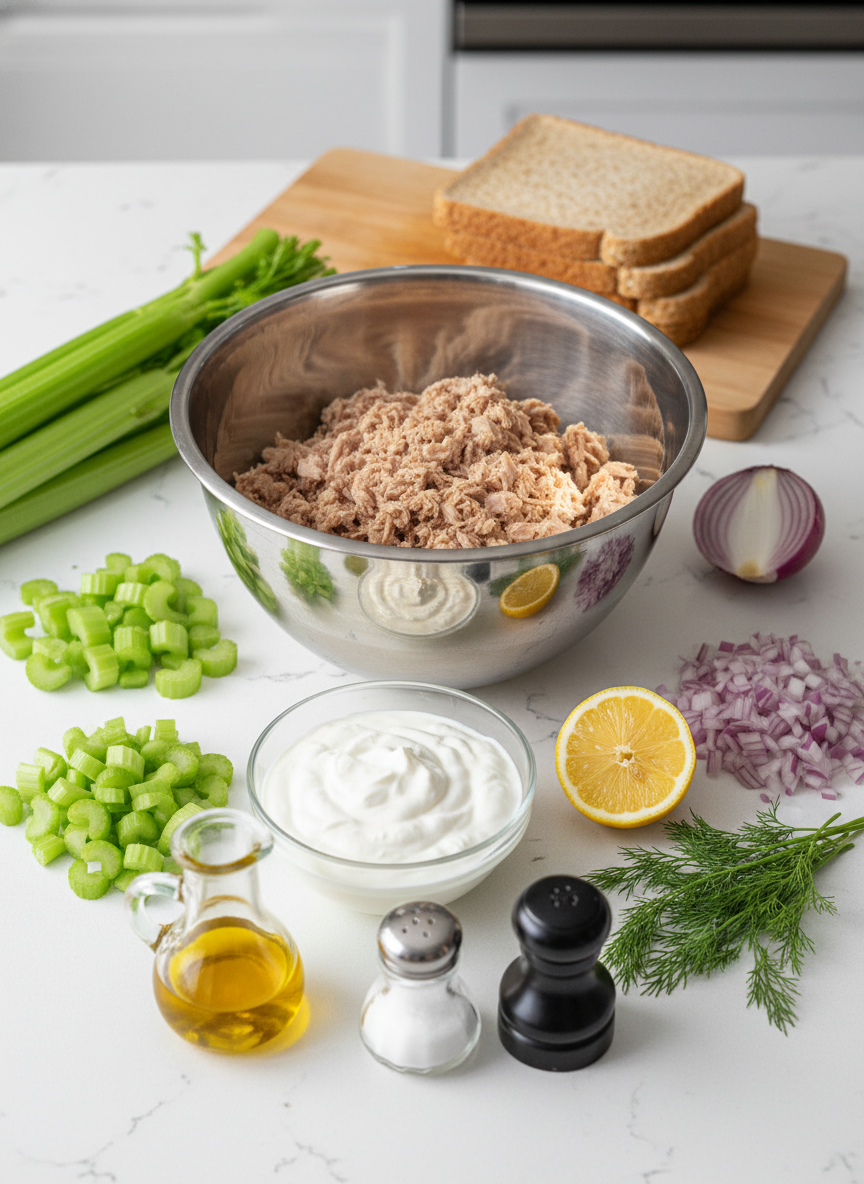
To make the best sandwich possible, quality ingredients matter. Since this is a simple recipe, there is nowhere for low-quality ingredients to hide. Here is what you need to gather:
- Canned Tuna: Look for skipjack or albacore tuna packed in water, not oil. The water-packed variety is lighter and absorbs the dressing better. You will need about two 5-ounce cans.
- Greek Yogurt: Use plain, unflavored Greek yogurt. While non-fat works, 2% or 5% fat content provides a much richer mouthfeel and less chalky texture.
- Celery: Two stalks, finely diced. This provides the essential crunch that contrasts with the soft tuna.
- Red Onion: about 1/4 cup, minced. This adds a sharp, savory bite. If you find raw onion too strong, soak the diced pieces in cold water for ten minutes before using.
- Dijon Mustard: One tablespoon. This acts as a bridge between the tuna and the yogurt, adding a peppery depth.
- Fresh Lemon Juice: One teaspoon. This brightens the whole dish.
- Fresh Herbs: Dill or parsley work best. Fresh is always better than dried for this salad.
- Salt and Black Pepper: To taste.
- Bread: A hearty sourdough, whole grain, or rye bread holds up best against the creamy filling.
– Instructions
Making this salad is incredibly straightforward, but following the correct order ensures the best texture.
- Drain the Tuna Thoroughly: Open your cans of tuna and drain as much water as possible. Press the lid down into the can over the sink to squeeze out excess moisture. Wet tuna results in a watery salad, so take your time here.
- Flake the Fish: Empty the tuna into a medium-sized mixing bowl. Use a fork to break up the chunks. You can leave it slightly chunky for texture or mash it down if you prefer a smoother spread.
- Add the Crunch: Toss in your finely diced celery and red onion. If you are using fresh herbs, chop them finely and add them now as well.
- Make the Dressing: In the same bowl, add the Greek yogurt, Dijon mustard, and lemon juice. It is often easier to mix the dressing ingredients right on top of the tuna rather than dirtying a separate small bowl.
- Mix Gently: Fold everything together until the tuna is evenly coated. Be careful not to overwork it, or it can become a paste.
- Season to Taste: Add a pinch of salt and a generous cracking of black pepper. Taste the mixture. If it feels “flat,” add a splash more lemon juice.
- Assemble the Sandwich: Toast your bread slices until they are golden brown. If you want extra protection against sogginess, you can place a leaf of lettuce on the bread first, then pile on the tuna salad. Top with the second slice of bread and serve immediately.
Storage Instructions
One of the best things about tuna salad made with Greek yogurt is that it holds up relatively well in the fridge. If you are meal prepping, store the tuna salad in an airtight glass container. It will stay fresh for **3 to 4 days**.
However, you may notice a little bit of liquid separation after the second day. This is natural because yogurt contains whey. Simply give the salad a good stir before you use it, and it will creamy up again.
Do not assemble the sandwich ahead of time. The moisture from the yogurt and the vegetables will seep into the bread, turning it into a mushy mess within a few hours. Keep the bread and the filling separate until you are ready to eat. This recipe does not freeze well; the yogurt will curdle and the vegetables will lose their crunch upon thawing.
Why This is Good for You
This sandwich is a significant nutritional upgrade from the diner classic. The most obvious benefit is the **reduction in saturated fat**. Mayonnaise is calorie-dense and high in fat, whereas Greek yogurt offers a creamy consistency for a fraction of the calories.
Furthermore, this meal is incredibly **protein-dense**. Tuna provides lean protein and essential Omega-3 fatty acids, which are great for heart and brain health. The Greek yogurt supplements this with additional protein and probiotics, which support gut health.
The inclusion of celery and onions adds a small boost of fiber and vitamins, but the real win is the sustained energy. Because you aren’t consuming a heavy load of processed fats, you are less likely to feel sluggish after lunch. It is a meal that fuels you rather than weighs you down.
Kitchen Tools We Recommend
Product | Product Name | Rating | Check Price |

| Air Fryer (Oil-Free Healthy Cooker) | ; | |

| Chef’s Knife (8-Inch Professional Kitchen Knife) | ; | |

| Stand Mixer (Multi-Function Baking Mixer) | ; | |

| Nonstick Frying Pan (Premium Skillet) | ; | |

| Digital Kitchen Scale (Precise Food Scale) | ; | |

| Blender (High-Speed Smoothie & Sauce Blender) | ; | |

| Measuring Cups & Spoons Set (Stainless Steel) | ; |
Common Mistakes to Avoid
Even with a recipe this simple, there are a few pitfalls that can ruin the final result.
Using Flavored Yogurt
This sounds obvious, but it happens more often than you think. Always double-check that you are buying “Plain” yogurt. Vanilla or honey-sweetened yogurt will completely ruin the savory profile of the tuna salad.
Not Draining the Tuna Enough
Greek yogurt has a higher water content than mayonnaise. If you don’t squeeze the water out of the tuna effectively, the mixture will become soupy. If your salad looks runny, you can try adding a teaspoon of chia seeds or a little more celery to absorb the moisture, but prevention is better than the cure.
Over-processing the Vegetables
When chopping your celery and onion, aim for a fine dice, not a puree. If you use a food processor, be careful not to pulse them into a liquid. You need distinct, crunchy pieces to provide texture against the soft tuna and yogurt.
Recipe Variations
Once you have mastered the base recipe, feel free to get creative. Tuna salad is a blank canvas that accepts many different flavor profiles.
- The Avocado Mash: Replace half of the Greek yogurt with half of a ripe avocado. Mash it right in with the tuna. This adds healthy fats and an incredible green color.
- Spicy Tuna: Add a tablespoon of Sriracha or chopped pickled jalapeños to the mix. The heat pairs wonderfully with the cooling sensation of the yogurt.
- Mediterranean Style: Mix in chopped kalamata olives, crumbled feta cheese, and diced cucumber. Swap the dill for oregano.
- Sweet and Savory: Add a handful of dried cranberries and chopped pecans or walnuts. The sweetness of the fruit balances the tartness of the yogurt perfectly.
- The Tuna Melt: Scoop the salad onto a slice of bread, top with a slice of sharp cheddar or provolone, and broil it in the oven for 3 minutes until the cheese is bubbly.
Frequently Asked Questions
Can I use non-fat Greek yogurt?
Yes, you can use non-fat (0%) Greek yogurt. However, be aware that it might taste slightly more acidic and have a less creamy mouthfeel than 2% or whole milk yogurt. If you use non-fat, you might want to add a tiny drizzle of olive oil to round out the flavor.
Does this taste like I’m eating yogurt?
Surprisingly, no. When mixed with the savory tuna, the salty brine of the fish, the sharp mustard, and the acid from the lemon juice, the distinct “yogurt” flavor fades into the background. It mostly just tastes tangy and creamy, similar to a buttermilk dressing.
What is the best bread for this sandwich?
Texture is key. Because the filling is soft, you want bread with a bit of a crust or crunch. Toasted sourdough is the gold standard. A dense pumpernickel or a seeded multigrain bread also works beautifully. Soft white bread tends to get gummy, so toast it well if that is all you have.
Can I make this dairy-free?
Since Greek yogurt is the star here, making it dairy-free requires a substitute. You can use a plain, unsweetened coconut or almond milk yogurt, but be careful with the flavor. A better dairy-free alternative might be mashed avocado or a vegan mayonnaise, though that changes the nutritional profile.
Wrapping Up
Switching to a tuna salad sandwich with Greek yogurt is one of those small dietary changes that yields big results. You don’t have to sacrifice flavor or texture to eat a little healthier. In fact, many people find that once they try the tangy, fresh flavor of the yogurt version, they actually prefer it over the heavy mayonnaise original.
Whether you are looking for a post-workout meal, a quick office lunch, or just a light dinner, this recipe covers all the bases. It is fast, cheap, healthy, and undeniably delicious. Give it a try this week, and you might just say goodbye to the mayo jar for good.