
If you have ever visited a Japanese steakhouse or a sushi restaurant, you have likely encountered the addictive, bright orange side dish known as Kani Salad. Traditionally, this dish is a creamy concoction of shredded imitation crab meat, crisp cucumber strips, and a generous amount of Japanese mayonnaise (usually Kewpie mayo). While delicious, the traditional version can be heavy and calorically dense, masking the delicate sweetness of the crab and the freshness of the vegetables.
Enter the Kani Salad without mayo. By stripping away the heavy fats and focusing on a zesty, aromatic vinaigrette, we transform this side dish into something entirely refreshing. It becomes a salad that cleanses the palate rather than coating it. Whether you are avoiding eggs, cutting calories, or simply prefer a lighter flavor profile, this recipe retains the essential “crunch” and “shred” of the original while elevating the flavors with sesame and ginger.
This version relies on the nutty aroma of toasted sesame oil and the tang of rice vinegar to bind the ingredients together. It is vibrant, colorful, and incredibly easy to assemble, making it the perfect accompaniment to sushi nights at home, grilled fish, or simply as a light lunch option.
Why This Recipe Works
The success of a Kani Salad lies not in the mayonnaise, but in the texture. The hallmark of this dish is the uniformity of the ingredients. When the imitation crab is shredded into long, thin strands and the cucumbers are julienned into matching matchsticks, every forkful provides a perfect balance of protein and vegetable.
Removing the mayo allows the natural sweetness of the surimi (imitation crab) to shine through. In the creamy version, the fat often dulls the subtle seafood flavor. Here, the salty soy sauce and sharp rice vinegar act as flavor enhancers, making the crab taste sweeter and the cucumber taste fresher.
Furthermore, this recipe works because it is highly customizable. Without the binder of mayonnaise, you have more freedom to play with acids and aromatics. It is also significantly more stable at room temperature than its mayo-based counterpart, making it a safer and more appealing option for potlucks or picnics where refrigeration might be spotty.
-Ingredients
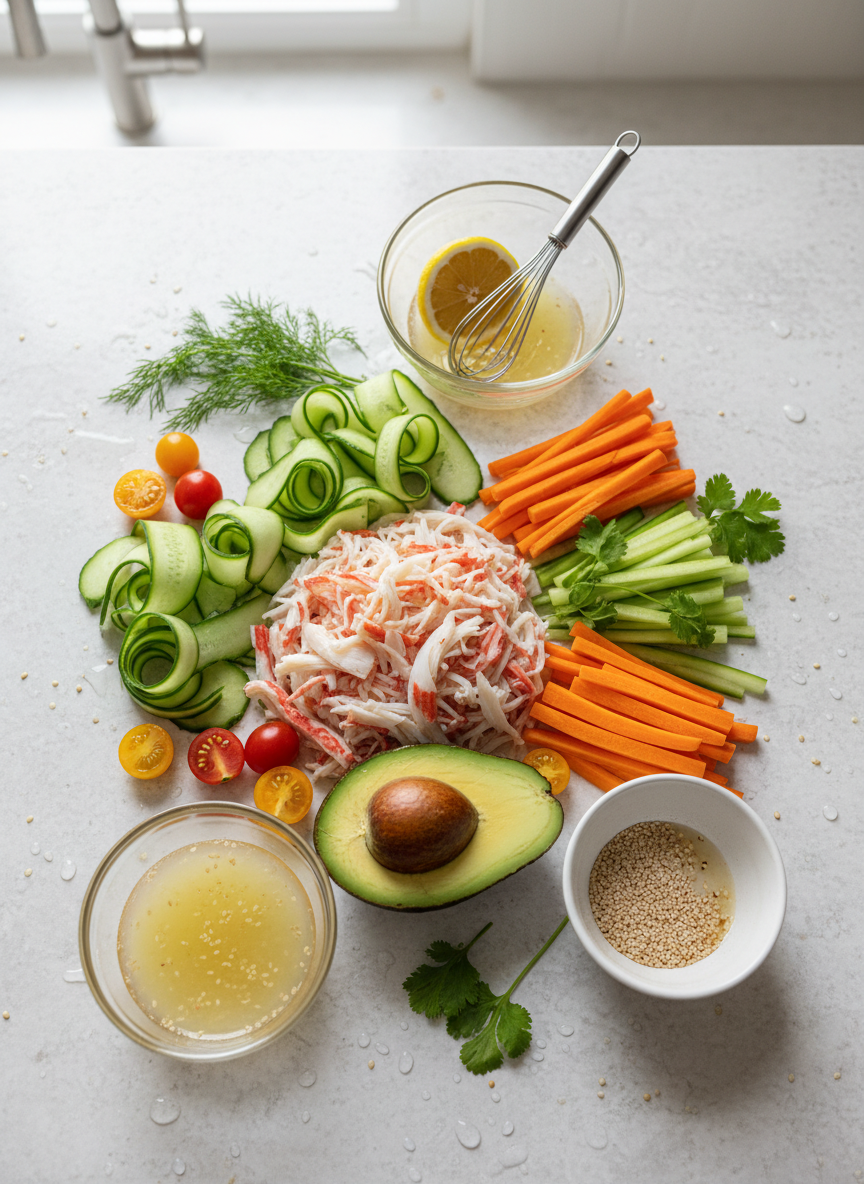
To make a stellar Kani Salad without mayo, fresh produce and quality pantry staples are essential. Here is what you will need:
- Imitation Crab (Kani): You want the “stick” variety rather than the “flake” style. The sticks are designed to be pulled apart into long, noodle-like strands, which is essential for the texture of this salad.
- English or Persian Cucumbers: These varieties have thinner skins and fewer seeds than standard slicing cucumbers. They are crunchier and release less water, ensuring your salad stays crisp.
- Carrots: While sometimes optional, julienned carrots add a pop of color and an earthy sweetness that complements the crab.
- Toasted Sesame Oil: This is the heavy lifter in a mayo-free dressing. It provides the mouthfeel and the signature nutty aroma associated with Japanese cuisine.
- Rice Vinegar: Choose unseasoned rice vinegar to control the sugar and salt content. It provides a mild, sweet acidity.
- Soy Sauce: Adds umami and depth. You can substitute Tamari if you are gluten-sensitive (though check your crab meat, as surimi often contains gluten).
- Fresh Ginger: Grated fresh ginger adds a spicy kick that cuts through the sweetness of the crab.
- Sesame Seeds: Both black and white sesame seeds add visual appeal and extra texture.
- Panko Breadcrumbs (Optional): For that restaurant-style crunch, toast some panko breadcrumbs and sprinkle them on top right before serving.
-Instructions
The preparation of this salad is largely about knife skills. Take your time to cut the vegetables uniformly for the best eating experience.
- Prepare the Kani: Remove the imitation crab sticks from the packaging. Gently squeeze the sides of the stick to loosen the fibers, then tear them lengthwise into thin strips. If the strips are too long, cut them in half crosswise. Place them in a large mixing bowl.
- Julienne the Vegetables: Wash your cucumbers thoroughly. If using English cucumbers, cut them into 2-inch segments. Slice the segments into thin planks, stack the planks, and slice them again into thin matchsticks. Repeat this process with the peeled carrots. The goal is for the veggies to mimic the size and shape of the shredded crab.
- Combine the Solids: Add the cucumber and carrot matchsticks to the bowl with the crab.
- Make the Vinaigrette: In a small jar or bowl, whisk together the toasted sesame oil, rice vinegar, soy sauce, and grated fresh ginger. Taste the dressing. If you prefer it sweeter, add a pinch of sugar or a drop of honey. If you want more tang, add a squeeze of lemon juice.
- Toss the Salad: Pour the dressing over the crab and vegetables. Use tongs or clean hands to toss everything gently until the ingredients are evenly coated and glossy.
- Garnish and Serve: Sprinkle generously with black and white sesame seeds. If using toasted panko, add it immediately before eating to maintain the crunch.
Keeping It Fresh
One of the challenges with any cucumber-based salad is water content. Cucumbers love to release liquid once they come into contact with salt (which is in the soy sauce). To ensure your Kani salad stays fresh and crunchy, follow these tips.
If you are not serving the salad immediately, store the chopped vegetables and the shredded crab in one container, and the dressing in a separate small jar. Combine them only when you are ready to eat.
If you have leftovers that are already dressed, they can be stored in an airtight container in the refrigerator for up to 24 hours. However, be aware that the salt will draw moisture out of the cucumbers, leading to a pool of liquid at the bottom of the container. The salad will still taste good, but the “crunch” factor will be diminished.
Do not attempt to freeze this dish; the texture of the cucumber and the imitation crab will be ruined upon thawing.
Our Favorite Kitchen Tools
Product | Product Name | Rating | Check Price |

| Air Fryer (Oil-Free Healthy Cooker) | ; | |

| Chef’s Knife (8-Inch Professional Kitchen Knife) | ; | |

| Stand Mixer (Multi-Function Baking Mixer) | ; | |

| Nonstick Frying Pan (Premium Skillet) | ; | |

| Digital Kitchen Scale (Precise Food Scale) | ; | |

| Blender (High-Speed Smoothie & Sauce Blender) | ; | |

| Measuring Cups & Spoons Set (Stainless Steel) | ; |
Why This is Good for You
Swapping out the mayonnaise makes a massive nutritional difference. A standard serving of Kani salad can contain tablespoons of mayo, adding saturated fats and significant calories. This version replaces those fats with sesame oil, which is rich in heart-healthy antioxidants.
Imitation Crab is a low-fat source of protein. While it is processed, it is derived from white fish (usually Pollock) and provides a good protein boost without the cholesterol found in red meats.
Cucumbers are high in water content and contain vitamins K and C. By increasing the ratio of vegetables to crab in this recipe, you are increasing the fiber and micronutrient density of the meal. This salad is hydrating, light on the stomach, and provides sustained energy without the “food coma” that often follows heavy, creamy side dishes.
What Not to Do
To guarantee the best results, avoid these common pitfalls:
* Do not use a food processor: It might be tempting to shred the vegetables or crab in a processor to save time, but this will result in a mushy, wet slaw rather than a crisp salad. Hand-cutting is necessary for the correct texture.
* Do not skip the seeding: If you only have standard garden cucumbers, you must scoop out the seeds with a spoon before slicing. The seeds contain the most water and will dilute your flavorful dressing instantly.
* Do not overdress: Start with less dressing than you think you need. The vegetables will release some juice, and you don’t want the salad swimming in liquid. You can always add more, but you cannot take it out.
Recipe Variations
While this sesame vinaigrette version is delicious, there are other ways to enjoy Kani salad without relying on traditional mayo:
* The Healthy Creamy Route: If you miss the creaminess but want to keep it healthy, substitute the mayo with plain Greek yogurt or a mixture of yogurt and a small amount of tahini. This provides the white, creamy coating and probiotics without the oil density of mayonnaise.
* Spicy Kani Salad: Add Sriracha or crushed red pepper flakes to the dressing. A “Spicy Kani” is a very popular variation in sushi restaurants, usually made with spicy mayo, but a spicy sesame soy dressing is equally potent.
* Tropical Twist: Add thin strips of ripe mango. The sweetness of the mango pairs beautifully with the crab and the salty soy sauce, adding a refreshing summer vibe.
* Avocado Kani: Instead of a liquid dressing, mash a ripe avocado with lime juice and toss it with the crab. The healthy fats from the avocado create a creamy coating that mimics mayo perfectly.
FAQ
Is imitation crab gluten-free?
Generally, no. Imitation crab (surimi) usually contains wheat starch as a binder. If you have Celiac disease or a gluten intolerance, you must look for specific gluten-free brands of imitation crab or use real lump crab meat instead. Also, ensure you use Tamari instead of standard soy sauce.
Can I use real crab meat?
Absolutely. While “Kani” specifically refers to the imitation stick style in the context of this salad, using fresh lump crab meat will make the dish significantly more luxurious and flavorful. However, real crab has a more delicate texture, so toss it very gently to avoid breaking the lumps apart too much.
How do I make the cucumbers less watery?
If you want the crunchiest salad possible, you can “sweat” the cucumbers. After julienning them, toss them with a pinch of salt in a colander and let them sit for 15 minutes. Squeeze out the excess moisture with paper towels before adding them to the salad. This keeps the dressing undiluted.
Final Thoughts
Kani Salad without mayo is more than just a dietary substitute; it is a reimagining of a classic that highlights clean flavors and crisp textures. By stepping away from the heavy dressing, you allow the ingredients to speak for themselves. This dish proves that healthy food does not have to be boring.
With the savory depth of sesame oil, the bite of fresh ginger, and the satisfying crunch of cucumber and surimi, this salad is destined to become a staple in your meal rotation. Whether served alongside sushi or eaten as a light snack, it is a bowl full of vibrant nutrition.